Everything You Need To Know Before Your First Visit to Seoul
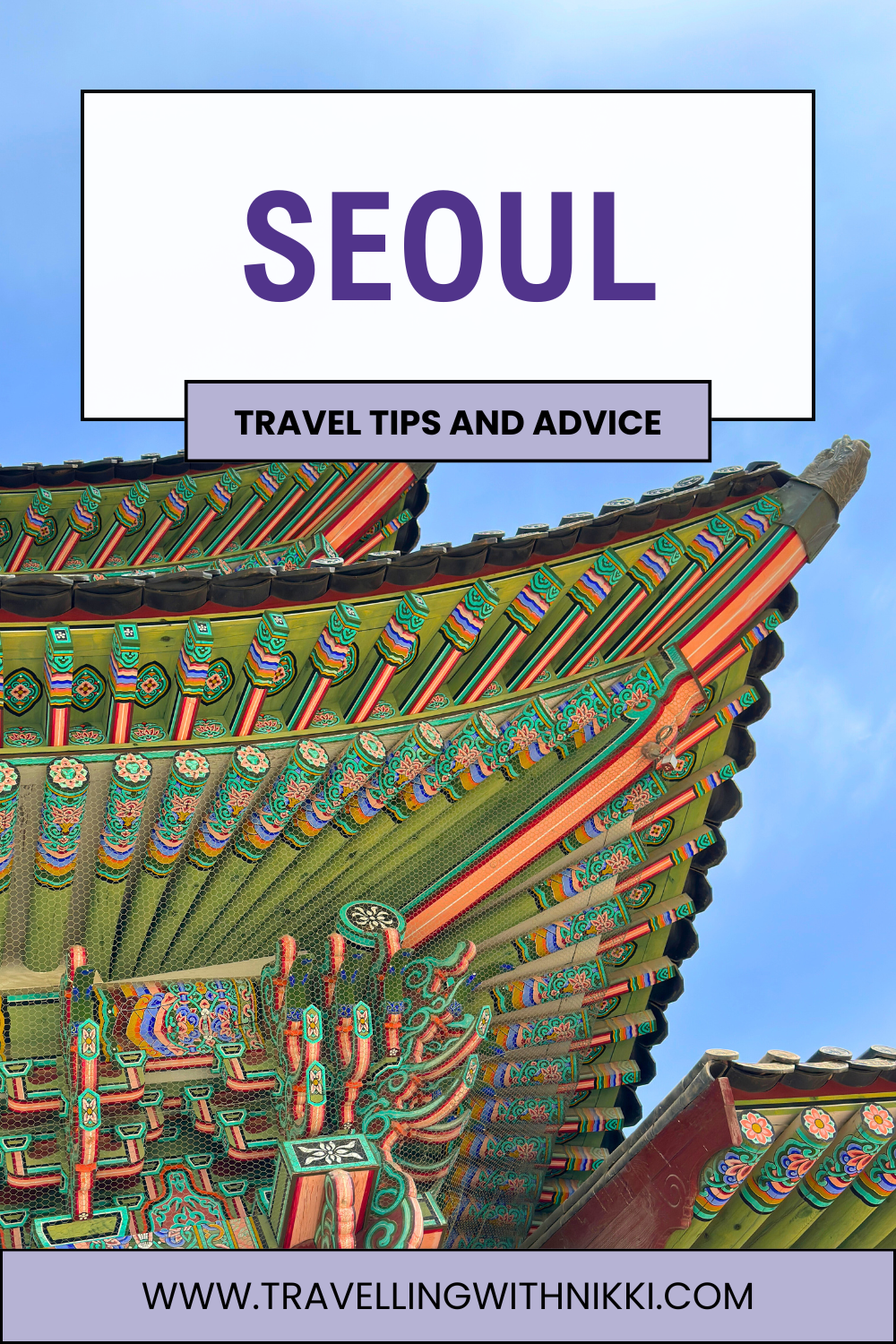
I had wanted to visit Seoul in South Korea for as long as I can remember. Despite having our long awaited trip cancelled a few years ago – the less said about that time, the better – I finally visited Seoul in September 2025 and it was even better than I could have ever wished for!
This trip was over five years in the making and I found that by having a little knowledge and doing some research ahead of time, you can definitely make the most of your time in Seoul. Seoul is a such a massive sprawling city and it can easily feel very overwhelming on your first visit if you have no idea what to expect, what to do or where to go and you could easily feel very lost.
Now that I am home from my amazing trip to South Korea, I have written this blog and travel guide and tried to include everything that you need to know before your first visit as well as some of the many things to see and do for first time visitors, all up to date details (so much that I had read before our trip turned out to be very old information), directions, advice, photos, tips and tricks as well as some things that I wish I had known and some mistakes that we made along the way to help you make the most of your trip to Seoul.
Entry Requirements for South Korea
Before travelling to South Korea, make sure to check the latest entry requirements for your nationality. Many visitors will either need to apply for a visa or a K-ETA (Korea Electronic Travel Authorization) before arrival.
However at this time some countries – including the UK – are currently exempt from the K-ETA requirement as part of a temporary waiver program. You can find the latest information about K-ETA exemptions on the official K-ETA Notice Board and if you do need to apply for a K-ETA, make sure to submit your application only through the Korean government’s official K-ETA website to avoid unofficial sites or scams.
When is the Best Time to Visit Seoul
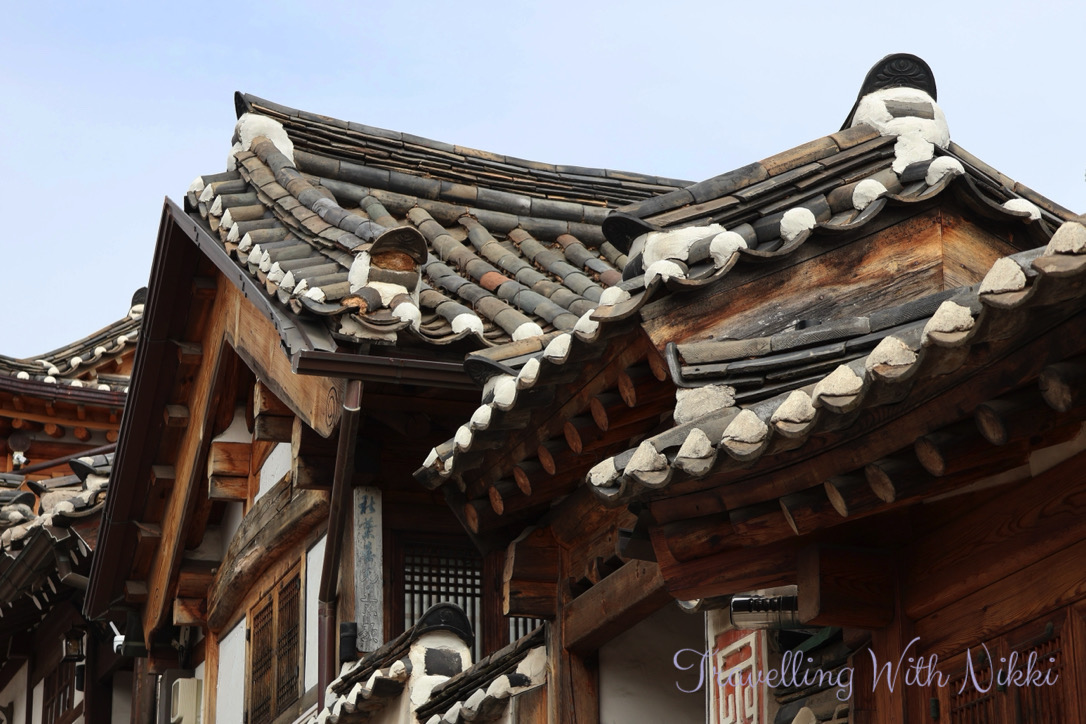
If you are wondering when the best time to visit South Korea is, it really depends on the kind of trip that you are after and what temperatures you are most comfortable with. Seoul experiences four very distinct and different seasons with extremely hot and humid summers with a chance of monsoon rain while winter brings freezing cold temperatures and snow.
In my opinion the best times to visit Seoul are during Spring (March, April and May) and Autumn (late September to early November), when the temperatures are mild, comfortable and the humidity of the summer is almost non-existent. These two seasons are also the most beautiful times to be in South Korea as you will see the Cherry Blossoms blooming in Spring while Autumn brings vibrant and colourful leaves. However if you are planning to visit in Autumn, be sure to check the dates for Chuseok (Korean Thanksgiving), as it is one of the country’s biggest holidays which lasts for several days and is one of of the busiest travel periods of the year.
We visited Seoul at the end of September which turned out to be absolutely perfect. The summer humidity had disappeared, we had bright blue skies for most of our stay and the temperatures were cool and comfortable which was ideal for sightseeing and walking around the city. We only had a few short rain showers which passed quickly and did not affect any of our plans at all.
How Long Should I Spend in Seoul
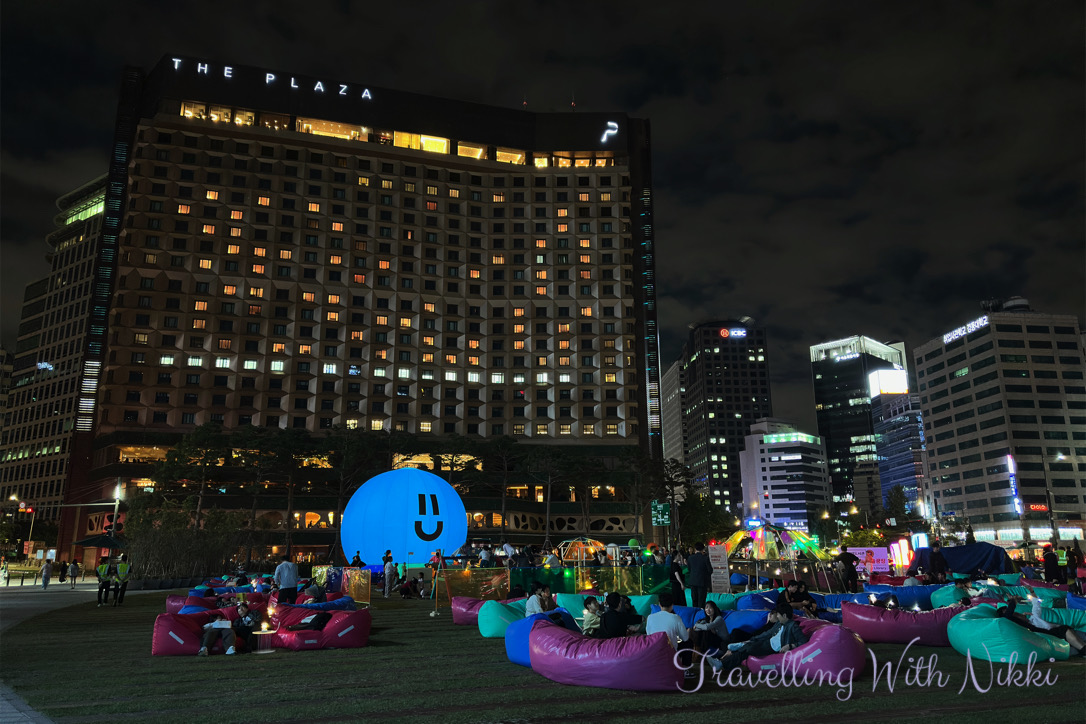
As there is so much to see and do in Seoul, the one thing that you need to know is that you will not be able to see everything on one trip especially as the city is so vast. I would definitely recommend staying at least five nights which will allow you to easily see all of the major highlights in the city, explore different neighbourhoods and even take a day trip outside of Seoul without feeling too rushed.
If you only have three or four days, you can still see a lot and get a great feel for the city, especially since Seoul’s public transportation makes it very easy to get around. However if you can stay longer, then you will be able to slow down and enjoy Seoul at a much more relaxed pace and see even more.
We originally booked to stay in Seoul for five nights but ended up staying for seven nights when our flight back to Hong Kong was cancelled and rescheduled (thank you Typhoon Ragasa) and it turned out to be a blessing in disguise as I always knew that I would love Seoul but I was not prepared for how much and having two extra days meant that we could see even more of this incredible and exciting city that I had very quickly fallen in love with.
Where to Stay in Seoul
If you are visiting Seoul for the first time, choosing a hotel in the right neighbourhood for you can make a huge difference to your trip. Seoul is an enormous city so staying close to a metro station is essential for being able to get around easily. Ideally you should pick a location in the centre of Seoul or close to the attractions that you plan to visit as otherwise you will spend a lot of time each day commuting across the city. For example while Gangnam is a trendy and modern area with many high end hotels, it is also quite far from many of Seoul’s major sights, making it less convenient for first time visitors who want to focus on sightseeing during their stay.
During our trip, we initially stayed at the Westin Josun Seoul which was conveniently situated between Myeongdong and City Hall/Seoul Plaza which put us within easy walking distance of shopping and restaurants as well as many of Seoul’s most famous landmarks. Later when our plans unexpectedly changed and we had a few extra days in Seoul, we moved to the nearby Courtyard by Marriott Seoul Namdaemun which was located right across from Namdaemun Market. We loved both hotels and would highly recommend them to anyone visiting Seoul.
How to Explore Seoul
As Seoul is so much bigger than you might expect with so many different neighbourhoods, it is best to break the city down into much smaller areas to explore as this will help to minimise travel times each day which will give you more time to fully enjoy each place instead of rushing from one side of the city to the other. Because Seoul is so spread out, planning ahead will make a huge difference especially if your time in the city is limited. Make sure to mark all of the places that you want to visit on a map before you travel as this will make it easy to create a plan for each day of your trip.
Once you are in each neighbourhood, Seoul is very walkable especially when a number of attractions are so close together. We found it so easy to explore this way which also gave us the opportunity to get lost in the backstreets and see what else we could find as we walked around. Some neighbourhoods such as Myeongdong and Insadong are within walking distance of each other which makes exploring both in a short amount of time even simpler.
Staying Connected in Seoul
Before arriving in South Korea, the most important purchase I made was an E-Sim which allowed me to stay connected whilst in Seoul. I found that having an E-Sim was essential as it made exploring a new city and country for the first time so easy and simple as I could quickly look up directions when I did not know where I was going or use a translation app whenever needed.
I purchased an LG U⁺ ten day E-Sim with unlimited data so I never had to worry about it running out and it worked perfectly as I never lost signal throughout my entire stay.
If you also need to access mobile data whilst visiting South Korea, you can purchase the same travel E-Sim through Airalo. If you would like to use my referral code NIKKI8866 when signing up, you will receive £2.50 / US$3 off your first purchase.
How to Get from Incheon Airport to Seoul
Incheon International Airport (ICN) is located just under forty miles west from the centre of Seoul and is well connected to the city by several different transportation options. Depending on your budget, schedule and comfort preferences, you can choose between the AREX Express Train, the All Stop Train, the Airport Limousine Bus or even a taxi and each option has its own advantages and disadvantages – and I have tried them all except for the taxi.
The AREX Express Train takes forty three minutes from Terminal 1 and fifty one minutes from Terminal 2 and runs non stop to Seoul Station and costs ₩13,000 (£6.90 / US$9). The main advantages of the Express Train are that you are guaranteed a comfortable seat for the journey (so it is possible to nap after a long flight) and there are also luggage racks at the ends of each carriage for any large bags that you have with you. The major disadvantage is that the train only runs every 30-40 minutes so if you just miss one, you will have a longer wait for the next one. Tickets are available from the machines near the entrance to the platform in each terminal although you can sometimes buy them cheaper in advance through Klook.
The All Stop Train takes fifty nine minutes from Terminal 1 and sixty six minutes from Terminal 2. It stops at all stations (including Gimpo Airport and Hongdae) between Incheon International Airport and Seoul Station and costs between ₩4,750-5,350 (£2.50-2.85 / US$3.30-3.75). The advantages of the All Stop Train are that it runs every 10-15 minutes, you can use your T-Money card to pay for your fare and if your final destination is not Seoul Station, this might be a more convenient option for you especially if you need to transfer onto another subway line. However the disadvantages are as it is a normal commuter train with very limited seating and no luggage racks, it does get extremely busy and crowded meaning you may have to stand for the entire journey as we did. Speaking from experience (after we used the All Stop Train to travel back to the airport midway through our trip to try and sort out our cancelled flight) when you’re tired, it’s a long, painful and uncomfortable journey and your feet will definitely feel it.
The Airport Limousine Bus is my favourite option for travelling between Incheon International Airport and Seoul. These buses have multiple routes and travel to all of the major neighbourhoods and large hotels across the city. After taking the Express Train to Seoul Station when we landed and struggling with our bags (and the stairs) on the subway at rush hour to go one stop to our hotel, we realised that we could have taken the bus directly from the airport straight to the door of our hotel. We did not make the same mistake again so on our return to the airport a week later, we took the bus instead and along with the giant comfortable chairs onboard, it was so easy and stress free that I would recommend this as the best option to anyone especially if travelling with larger luggage, children or if you have any mobility issues. The journey will take between sixty and ninety minutes depending on traffic and the buses depart from directly outside each terminal. A one way ticket costs approximately ₩16,000 (£8.50 / US$11) and you can also buy your tickets ahead of time through Klook.
The above are affiliate links through Klook. Any tickets purchased from these links earns myself a small commission at no additional cost to you.
For those arriving late at night or very early in the morning when the trains and buses are not running, a taxi or Uber is one of the few available options between the airport and the city. You can check estimated fares directly in the Uber app or on the Incheon Airport website.
How to Get from Gimpo Airport to Seoul
Gimpo International Airport (GMP) is much closer to the centre of Seoul than Incheon Airport — about fifteen miles away — making the journey into the city much quicker and simpler. This airport mainly handles domestic flights from within Korea as well as several short haul international routes to Japan, China and Taiwan.
The All Stop Train takes twenty two minutes to Seoul Station and stops at Magongnaru, Digital Media City, Hongik University and Gongdeok before reaching Seoul Station and costs ₩1,850 (95p /US$1.25) for the journey and you can use your T-Money card to pay for your fare. Subway lines 5 and 9 also stop at Gimpo Airport making it very easy to reach anywhere across the city.
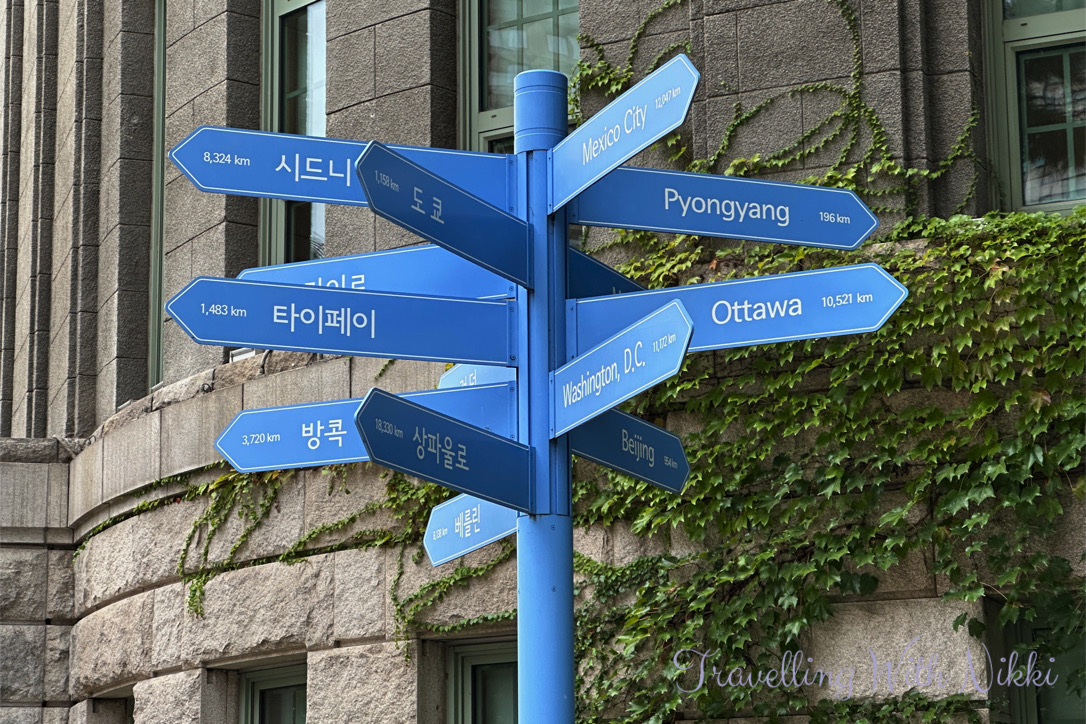
How to Travel Around Seoul
As public transportation in Seoul is so cheap and reliable, exploring the city no matter where you stay is so easy. Whilst there are also buses available, we only used the subway during our stay which covered the entire city and consists of twenty four lines and over six hundred stations – all of the lines are coded different colours and each station is also numbered making it very easy to navigate especially when using Naver Maps, Kakao Maps or the Seoul Subway apps.
There are Korean, English and Chinese signs in all of the stations and it will also say which stop the train is going to next to make sure that you get on the right train in the right direction. The subway system can get very busy and crowded during rush hour so try to avoid travelling during this time as it is much calmer during the rest of the day.
You can travel on the subway by either purchasing single journey tickets which start at ₩1,650 (90p / US$1.15) plus a small refundable deposit (which you can get back when you reach your destination by returning the ticket card) or by simply using a T-Money card which makes each journey slightly cheaper as the fares start at ₩1,550. If using a T-Money card you can also transfer for free between the subway and bus lines and if using the bus, make sure to tap your T-Money card when you get off the bus as well as when you get on.
Each subway car has reserved seats for anyone who is pregnant or elderly so do not be that person and make sure to not sit in those seats at any time even if they are empty when the rest of the train is completely full.
The T-Money Card
One of the most essential purchases you can make when visiting Seoul is a T-Money card which is a rechargeable transportation card that makes getting around the city incredibly easy and convenient. You can use it to pay for the subway, buses, taxis and even at vending machines and convenience stores (and some cafes like Starbucks) across Seoul and most of South Korea.
You can buy a T-Money card at most convenience stores such as 7-Eleven, CU, GS25, Ministop, Story Way and Emart24 as well as at all subway stations. There are many different designs to choose from and I bought mine from a machine near the entrance to the All Stop Train at Incheon Airport as soon as I arrived in South Korea which cost ₩5,000 (£2.60 / US$3.50). Another great thing is that your T-Money card does not expire so you can keep it and use it again on your next trip to South Korea.
Once you have your T-Money card, it is very easy to add funds. I started with ₩20,000 (£10.60 / US$14) and topped it up when needed. You will usually need cash to load your card although I have recently seen online that there are now a handful of machines across Seoul that now accept credit cards but as these are still quite rare, it is always best to carry some cash with you just in case. One of my favourite things about using the T-Money card in shops was not having to deal with loose change every time I bought something which is such a small thing but made life so much easier!
What is the Currency in South Korea
The currency in South Korea is the Won. Before my trip in September 2025 I had read many blogs which said that Apple Pay would not work in Seoul and to take lot of cash with me. However in reality I found the exact opposite as Apple Pay worked almost everywhere that I went with only a handful of other places actually needing the physical card itself. The only times that I needed to use cash during my stay was to top up my T-Money card, at markets or to buy any street food.
So the moral of the story is that you do need some cash with you in Seoul but not too much – I ended up spending the cash I took with me in stores that accepted cards just to use it up and I even brought some back home with me too which I will take with me on my next trip hopefully in the very near future.
The English Language in Seoul
English is not an issue at all in Seoul especially in the major tourist areas and you will have no trouble communicating in shops, restaurants, hotels and other service or hospitality settings. Most signs including those in train stations will also be in English and many restaurants also have screens with an English option to order food.
However in less touristy neighbourhoods or outside of the city, English will be much more limited and this is when a translation app such as Papago will be invaluable.
However always be polite when you travel and make sure to learn a few words of Korean before you arrive such as Annyeonghaseyo (Hello), Gamsahamnida (Thank You), Juseyo (Please Give Me), Igeo (This One), Annyeonghigyeseyo (Goodbye), Joesonghamnida (I’m Sorry) and Sillyehamnida (Excuse Me).
What to See in Seoul
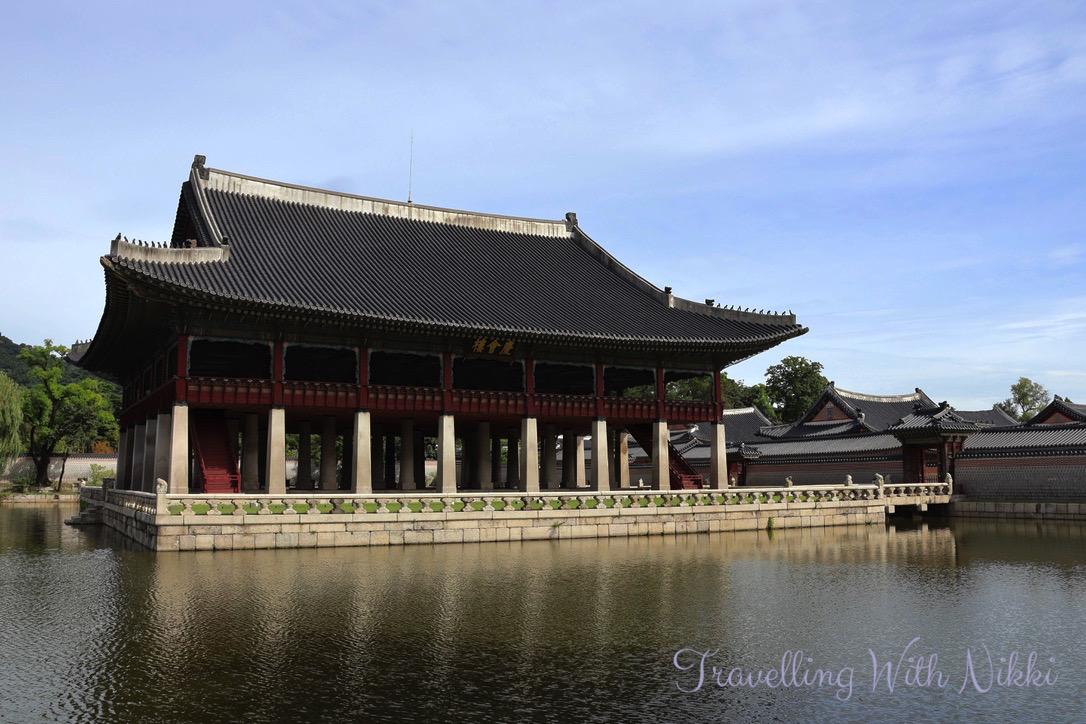
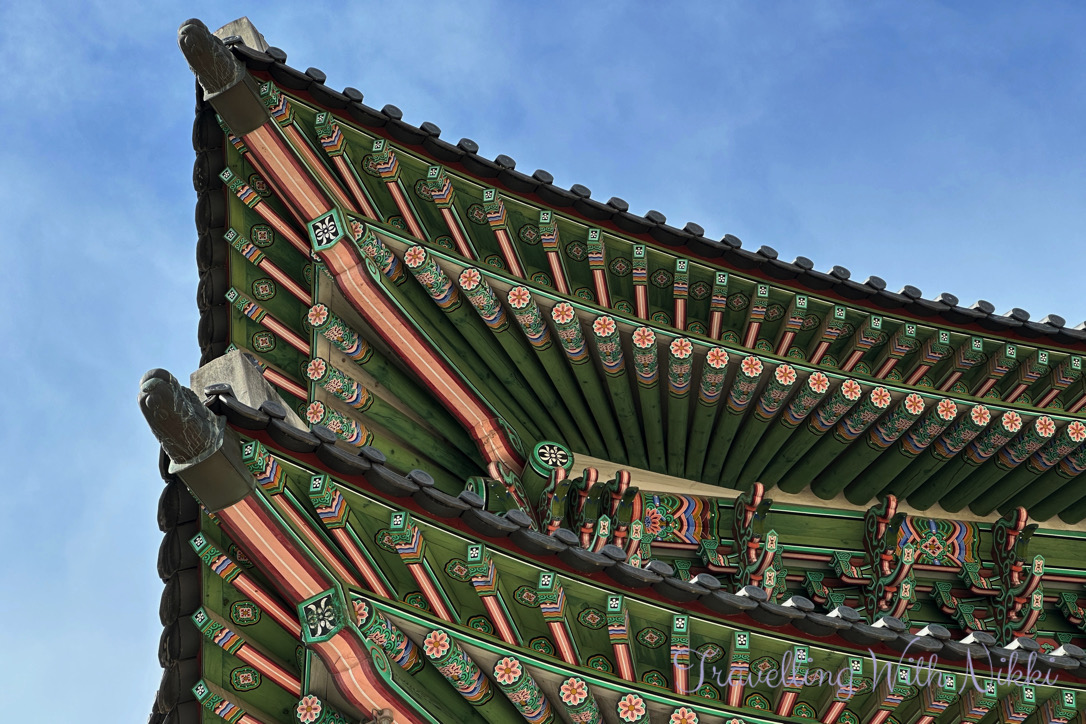
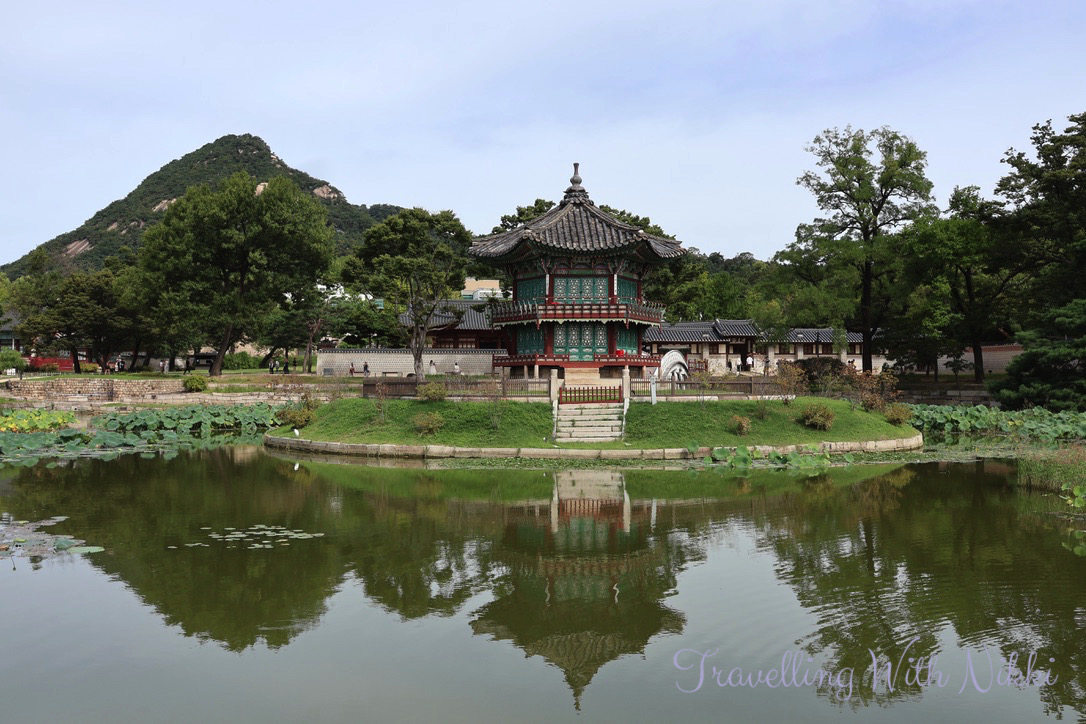
Gyeongbokgung Palace
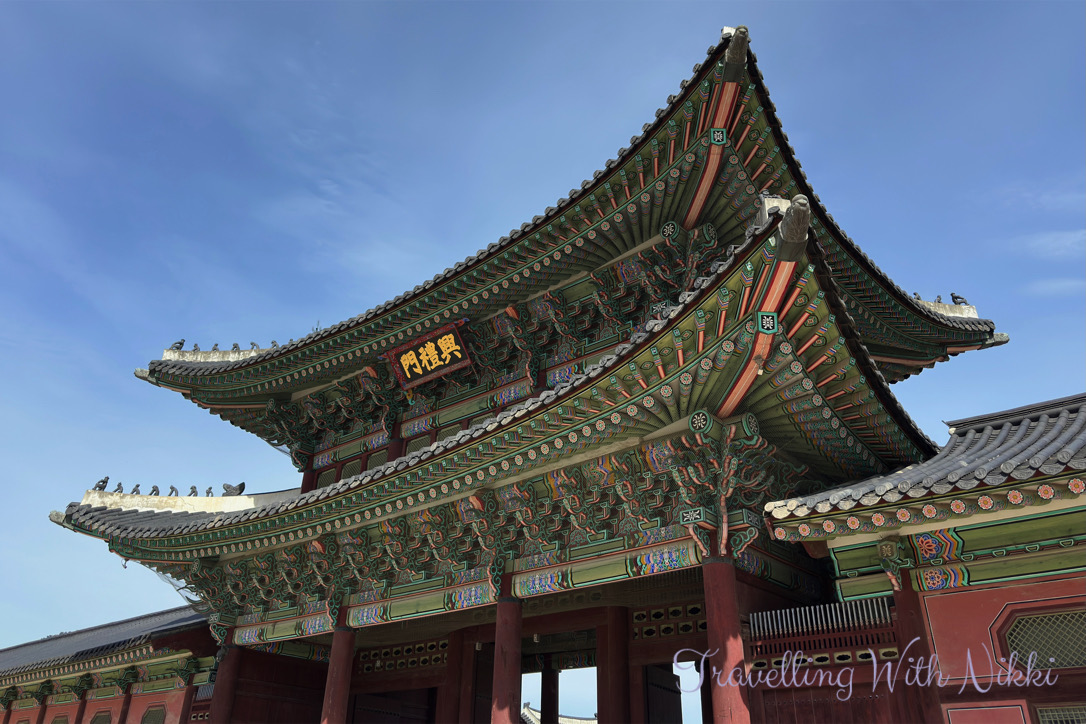
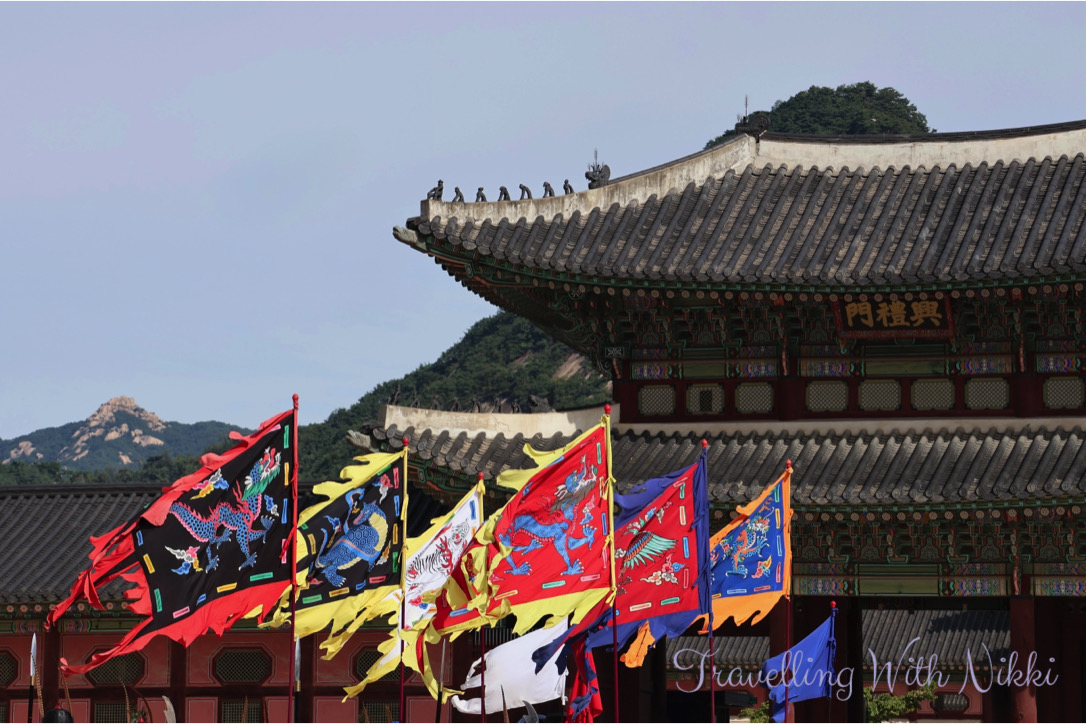
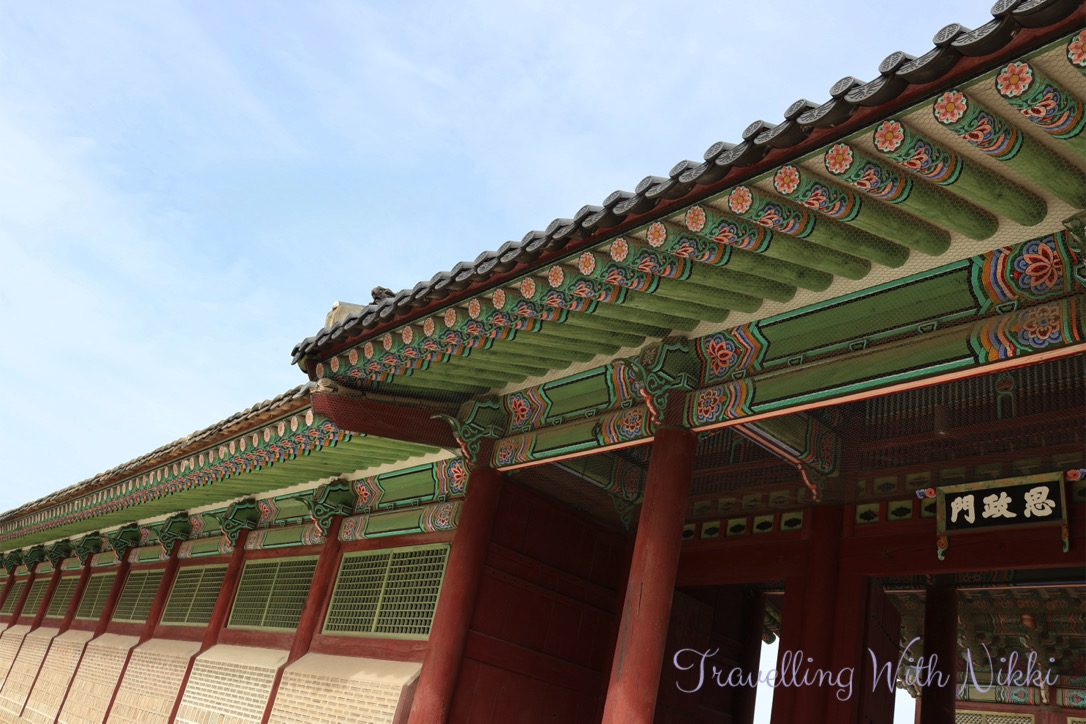
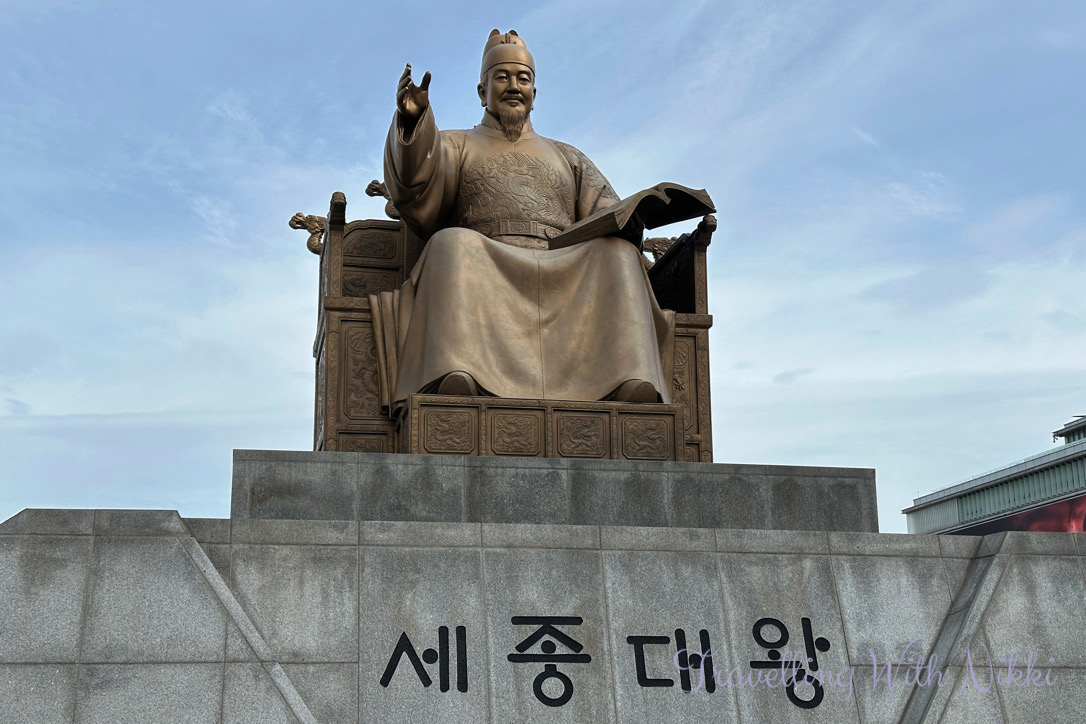
This is the largest and most famous of Seoul’s five Royal Palaces which dates back to the Joseon Dynasty. You can watch the colourful Changing of the Guard ceremony every day (apart from Tuesdays when the palace is closed) at 10:00am and 2:00pm between the Gwanghwamun Gate and the Heungnyemun Gate which lasts for twenty minutes and is definitely worth seeing.
The palace grounds are beautiful to walk around especially during Spring and Autumn and even though it can get quite busy, it is always possible to find a quiet corner to relax, enjoy the peace and quiet and watch the world go by.
Entrance to Gyeongbokgung Palace costs ₩3,000 (£1.50 / US$2) and if you wear a traditional Korean hanbok, you can enter for free however something that no one else ever mentions is that renting a hanbok (plus all of the accessories) will probably cost a lot more than the actual ticket itself!
Changdeokgung Palace
Changdeokgung Palace is an UNESCO World Heritage site which was built in the 15th century as a secondary royal residence before it later become the main home for several kings of the Joseon Dynasty. The palace is most well known for its famous Secret Garden or Huwon which requires you to pre-book a guided tour in advance for a small additional fee.
Entrance to Changdeokgung Palace costs ₩3,000 (£1.50 / US$2) with an additional ₩5,000 (£2.70 / US$3.50) to visit the Secret Garden. You can enter the palace for free if you are wearing a hanbok, though the Secret Garden still requires a paid ticket. The palace is closed on Mondays so make sure to plan your visit accordingly.
Bukchon Hanok Village
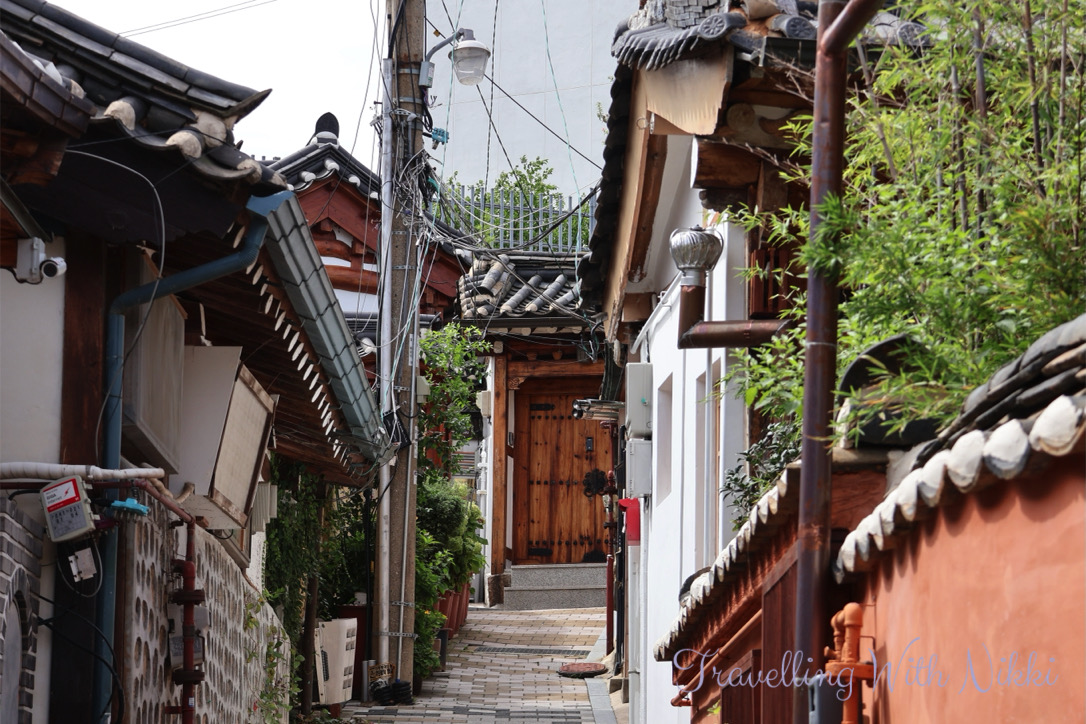
Bukchon Hanok Village is a historic neighbourhood featuring traditional Korean houses known as hanoks which date back to the Joseon Dynasty. Visitors can stroll along the narrow streets and winding alleys to admire the traditional architecture and get a glimpse of life in Korea many years ago. As it is a residential area, the village is open only from 10:00am to 5:00pm and visitors are asked to keep noise levels low and there are even staff located around the village to make sure that these rules are followed.
The village is extremely popular for photography making it one of the most Instagrammable spots in Seoul and it can get very busy and crowded. It is located on the hillside between Gyeongbokgung Palace and Changdeokgung Palace making it very easy to walk between and visit all three sites in a single day.
Cheonggyecheon Stream
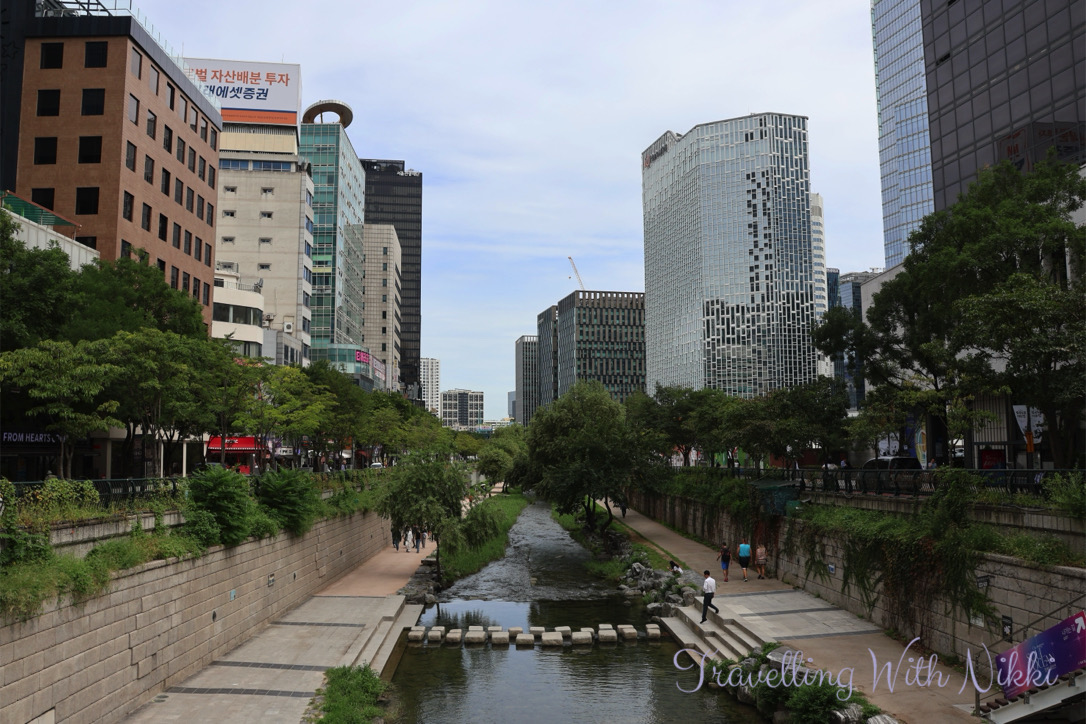
The beautiful Cheonggyecheon Stream is a seven mile urban renewal project that replaced an old highway and opened in 2005. It runs through the heart of Seoul from Cheonggye Plaza near Gyeongbokgung Palace under twenty two bridges all the way to the Han River.
It is a peaceful oasis and a perfect escape from the busy city streets above with waterfalls and stepping stones make it a relaxing spot to stroll along or just sit by the water. In the evenings, the stream comes alive with light shows creating a calm and magical atmosphere and it was one of my favourite places I visited whilst in Seoul.
Jogyesa Temple
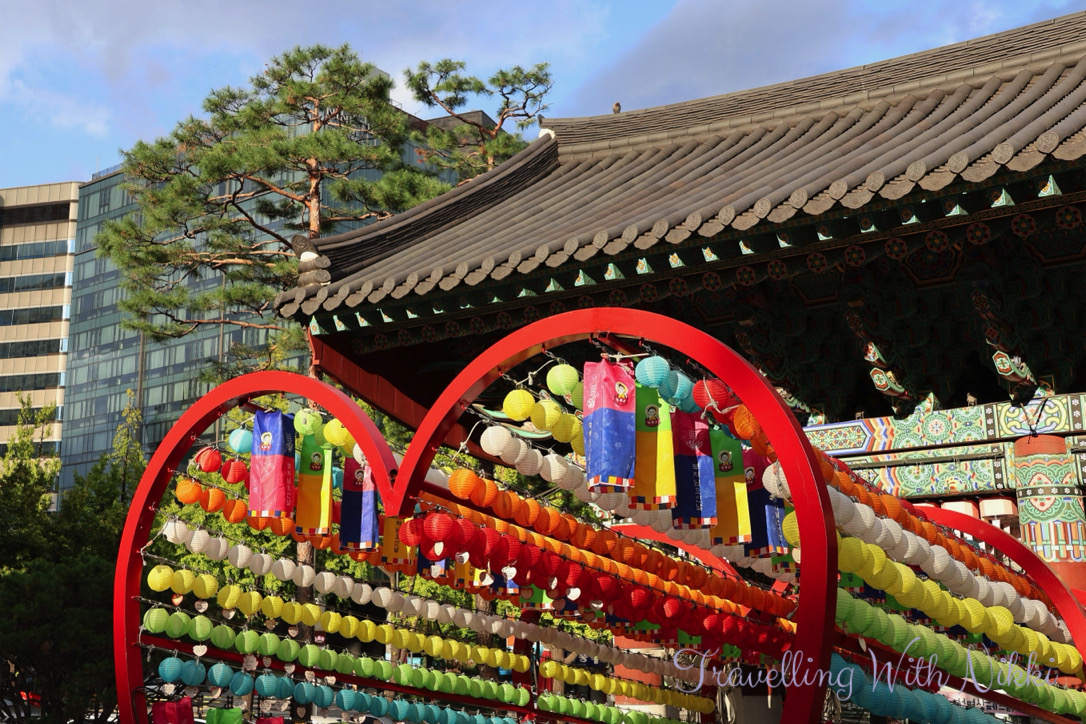
Jogyesa Temple is one of the most important Buddhist temples in Korea, located in the centre of downtown Seoul and surrounded by the nearby high-rise buildings. It was built in 1395 and is famous for its colourful decorations as well as Daeungjeon Hall, which houses three large golden statues of Buddha, each measuring nearly five metres tall.
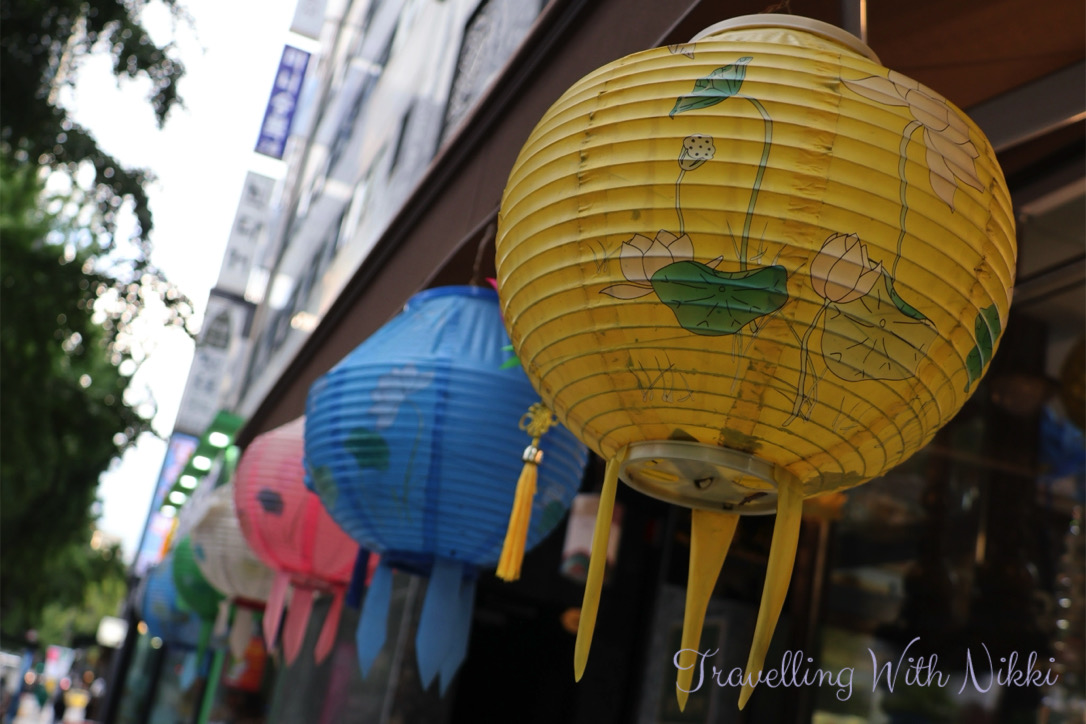
The temple is especially beautiful during the Lotus Lantern Festival which is held every year in May for Buddha’s birthday, when hundreds of colourful lanterns light up the grounds and create a magical atmosphere. Jogyesa Temple is free of charge to visit and is close to Gyeongbokgung Palace and Bukchon Hanok Village, making it easy once again to combine into one day of sightseeing.
N Seoul Tower and Namsan Park
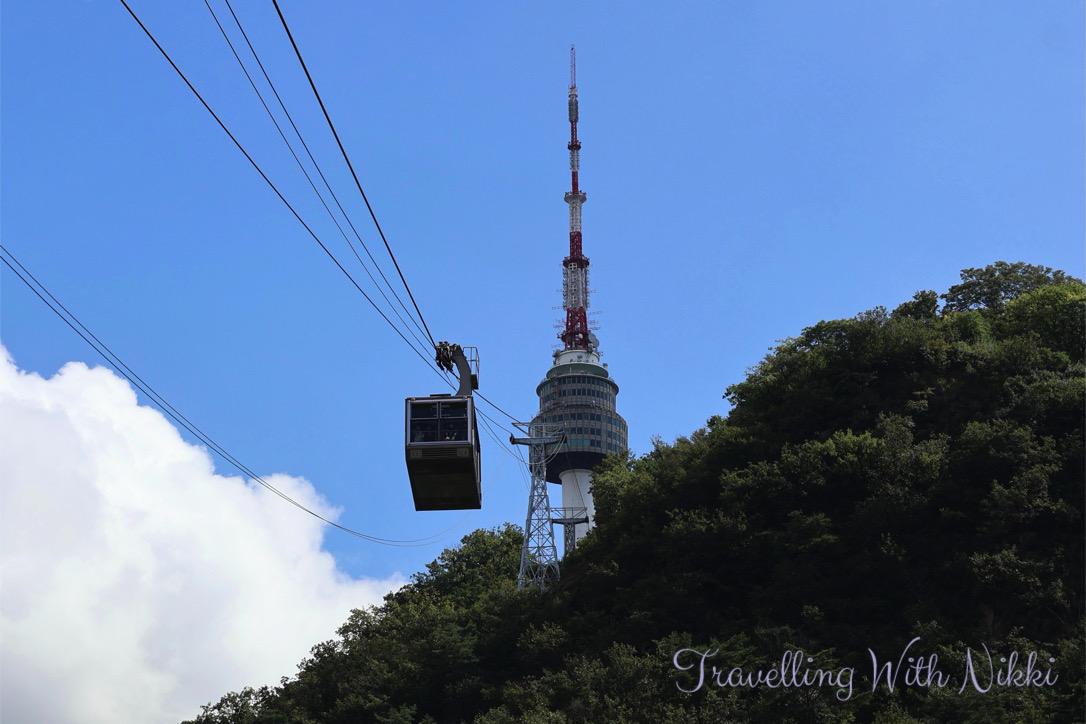
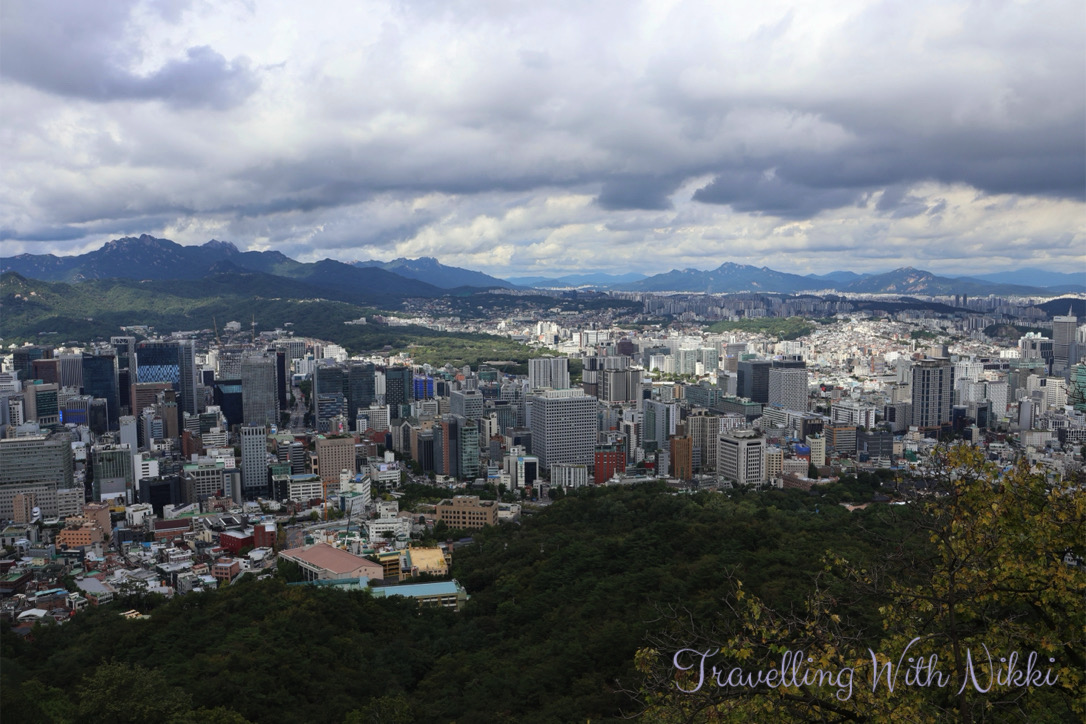
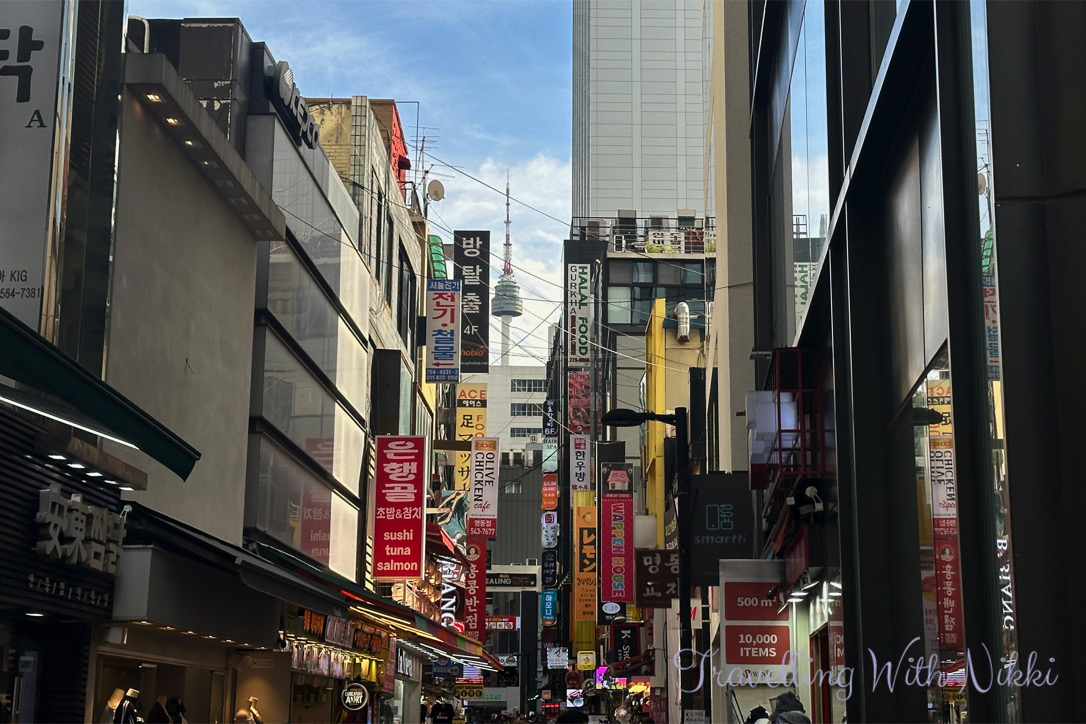
N Seoul Tower which is also known as Namsan Tower sits at the top of Namsan Mountain and offers stunning panoramic views of Seoul. You can reach it either by walking up the steep hill (there are a lot of steps!) for free or by taking the Namsan Cable Car from near Myeongdong which costs ₩15,000 (£8 / US$10.50) round trip which in my opinion, is worth every penny.
However you do not need to go up to the top of the tower itself – which costs an extra ₩26,000 (£14 / US$18) – to get a great view of Seoul as there are many observation decks close to the base of the tower in Namsan Park which offer amazing views of Seoul in each direction with no added expense.
Naksan Park
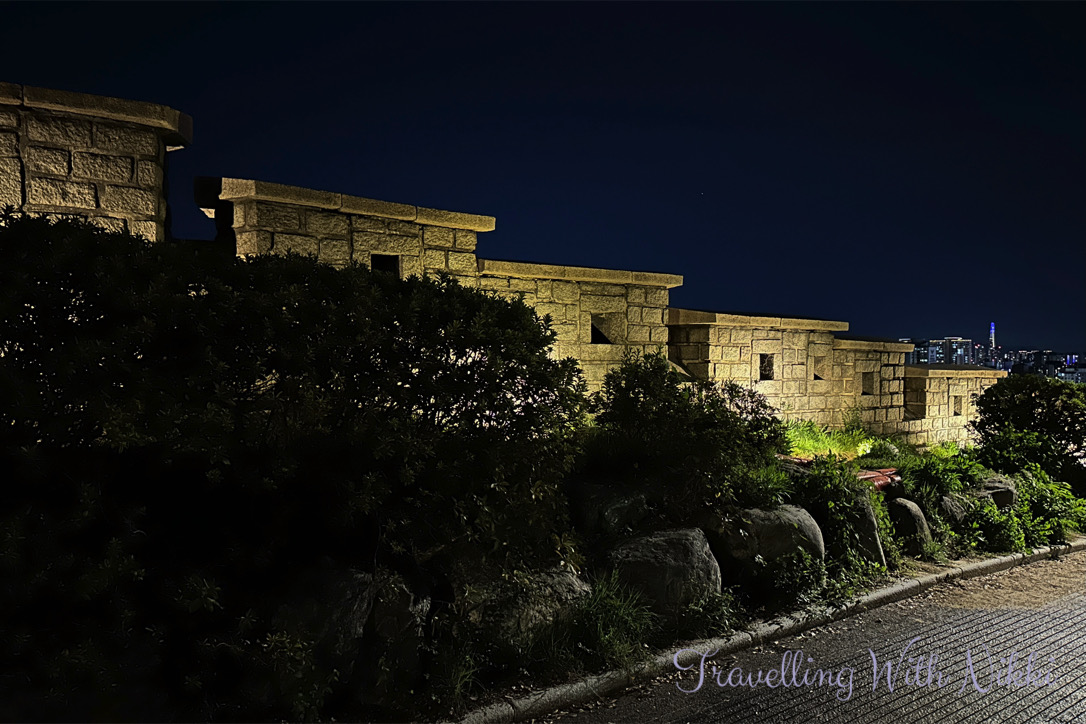
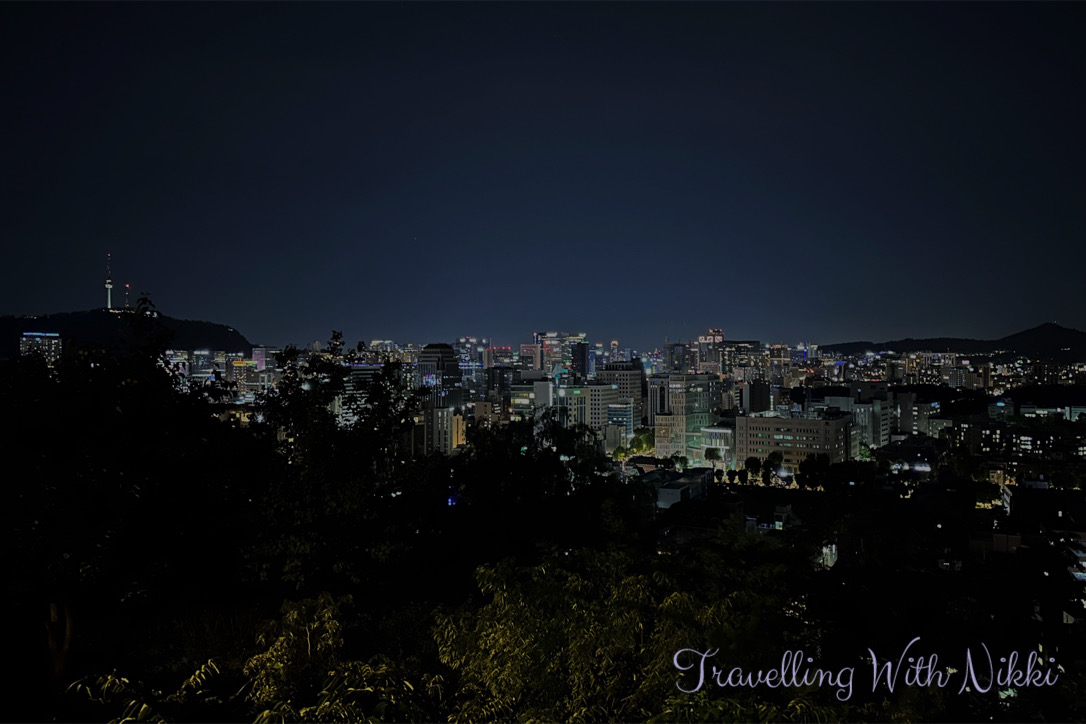
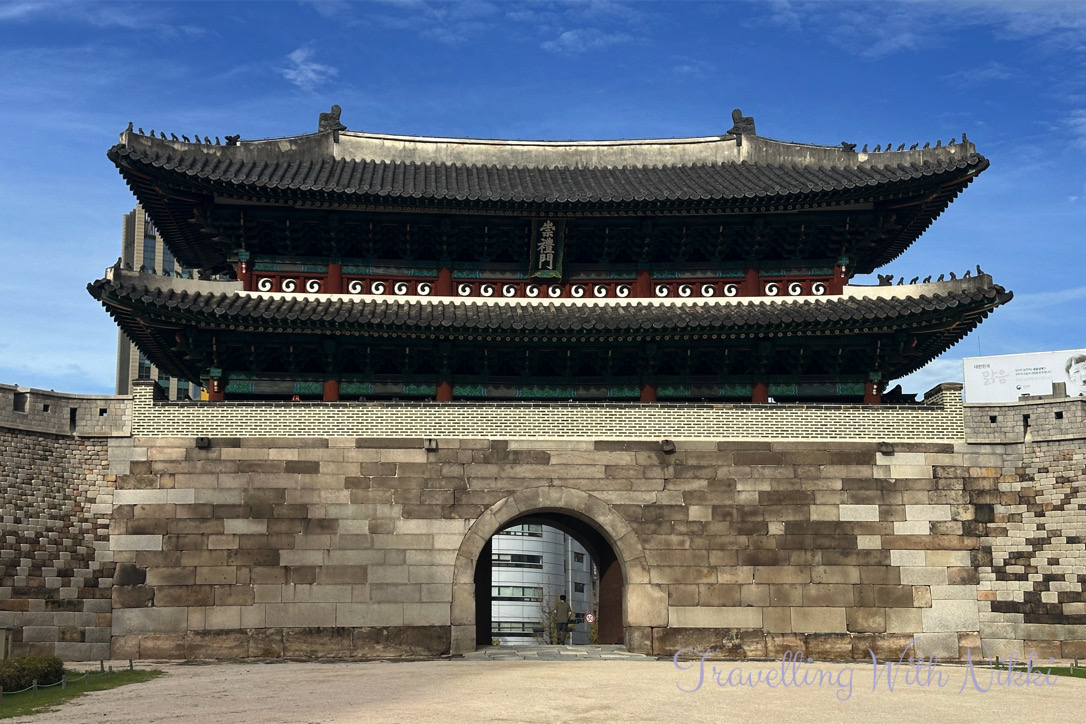
Naksan Park is a beautiful spot in the city which is not to be confused with the more famous and busier Namsan Park and was one of my favourite places that we visited during our stay. It is located next to Heunginjimun Gate in Dongdaemun and is home to one of the sections of the almost twelve mile long Seoul City Wall which was originally built in the 1390’s. It is the perfect spot for a peaceful evening walk where you can enjoy incredible (and free) panoramic views of the Seoul skyline from the illuminated walls.
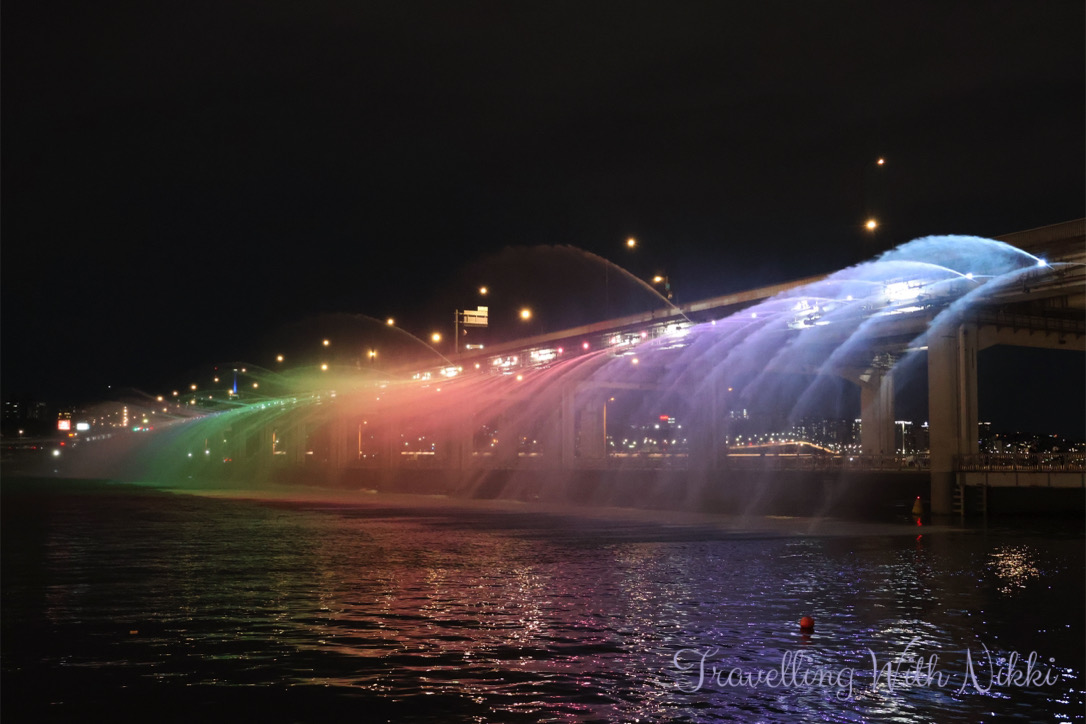
Banpo Bridge Rainbow Fountain
Four to five times every evening from April to September, the one kilometre long Banpo Bridge comes alive with nearly four hundred water jets that perform in a free twenty minute spectacular light and music show. The fountain’s colourful lights and water dance to everything from classical music to K-Pop and the best places to watch the show are from Banpo Hangang Park, Moonlight Square or anywhere along the lower deck of the bridge for a slightly different perspective.
The DMZ
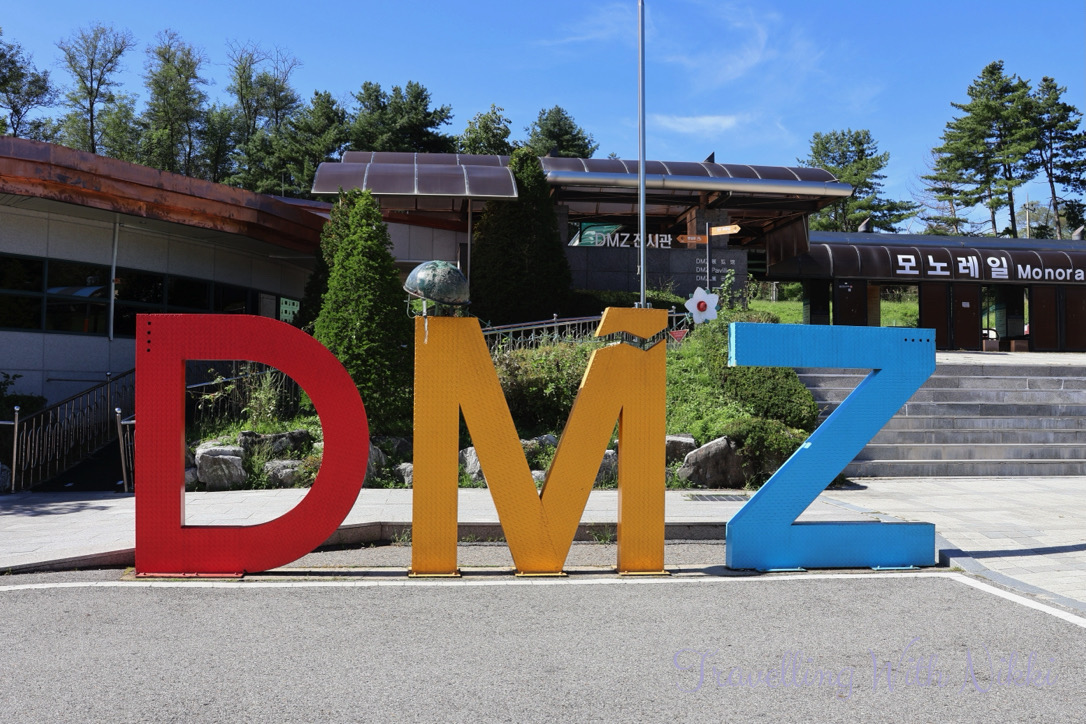
The Demilitarized Zone (DMZ) is a heavily guarded 160 mile long strip of land separating North and South Korea, created after the Korean War in 1953. Visiting the DMZ is only possible with an official guided tour and a passport is required. There are both half day and full day tours available from Seoul which normally include stops at the Imjingak Peace Park, the Third Infiltration Tunnel and the Dora Observatory where you can look directly across into North Korea. Tours also used to include a visit to the Joint Security Area (JSA) although JSA visits are currently restricted at this time. A trip to the DMZ offers a fascinating and sobering insight into Korean history, the war as well as the ongoing division between the two countries. The DMZ is closed every Monday and make sure to book your tour in advance as they can sell out during busy times.
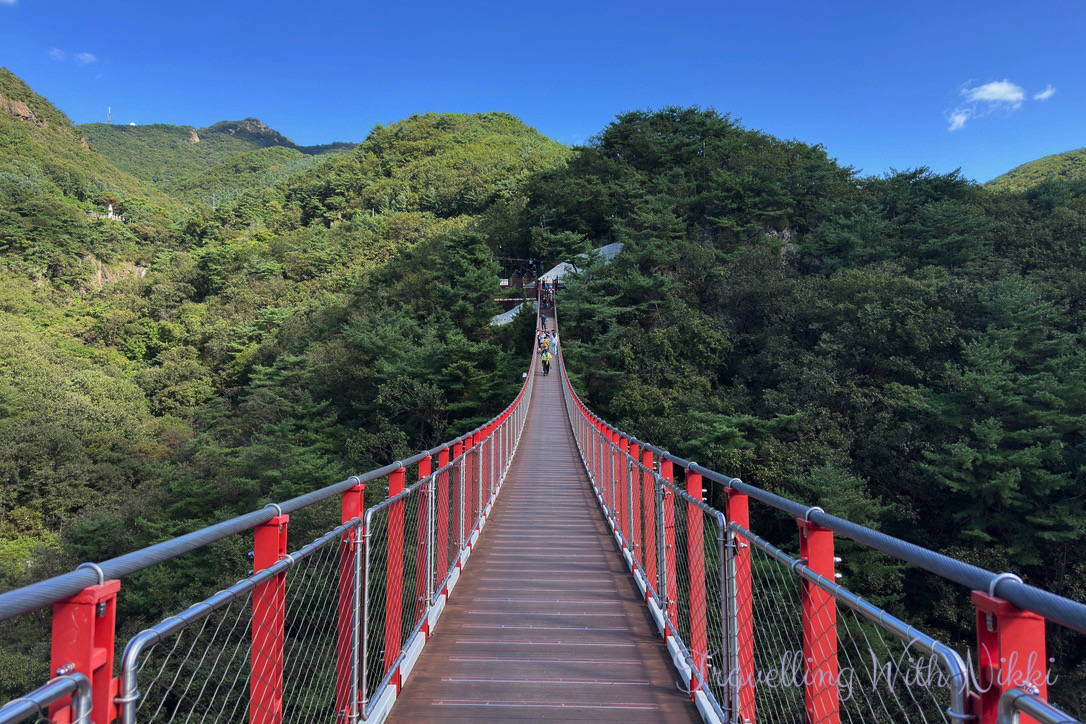
We booked our full day private guided tour to the DMZ through Klook which included a stop at the Gamaksan Suspension Bridge as well as both pick up and drop off at our hotel.
Starfield Library
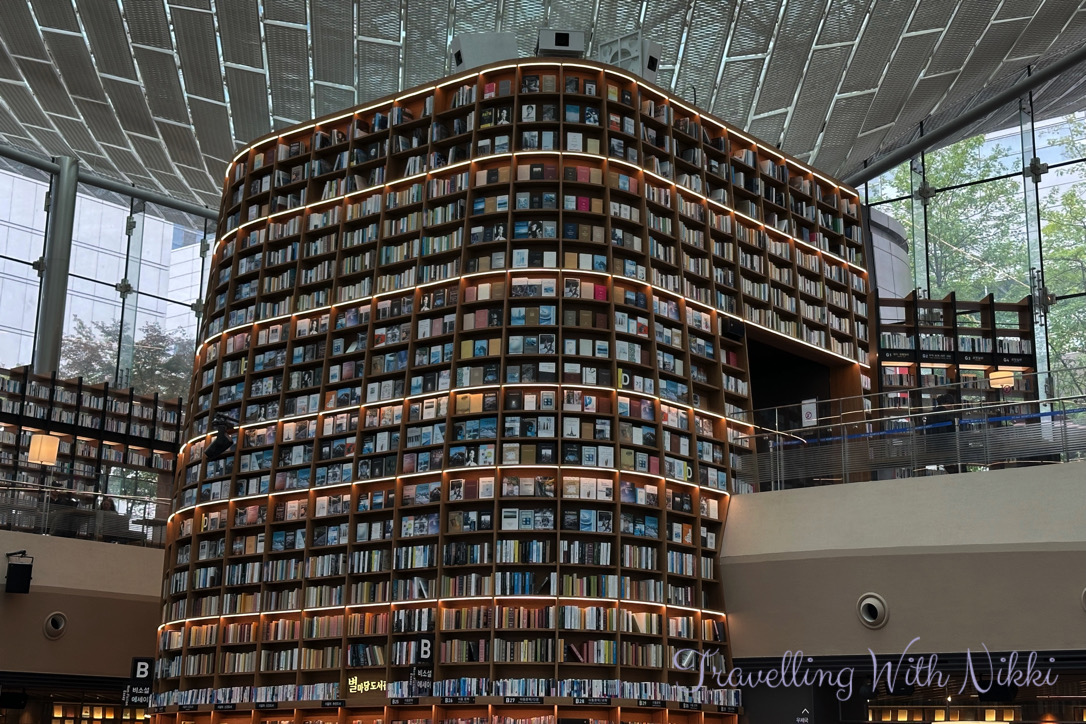
The Starfield Library, located on the ground floor of the COEX Mall in Gangnam, is another of the most Instagrammed spots in Seoul. With its giant bookshelves, it is somewhere that seemingly makes for a perfect photo opportunity. However the “library” is so much smaller in person than it appears online. It is definitely a case of Instagram vs Reality as there is even a Starbucks located under the shelves of fake books and it can get very busy, noisy and crowded with so many people all wanting the exact same photo on the escalators making it a little bit of a tourist trap.
Whilst I would not recommend making the long train ride from the centre of Seoul out to Gangnam just to visit the library itself, it is worth a quick stop just to see what all the hype is about if you are already in the area. We spent less than five minutes here before heading to nearby Lotte World for the afternoon.
Lotte World
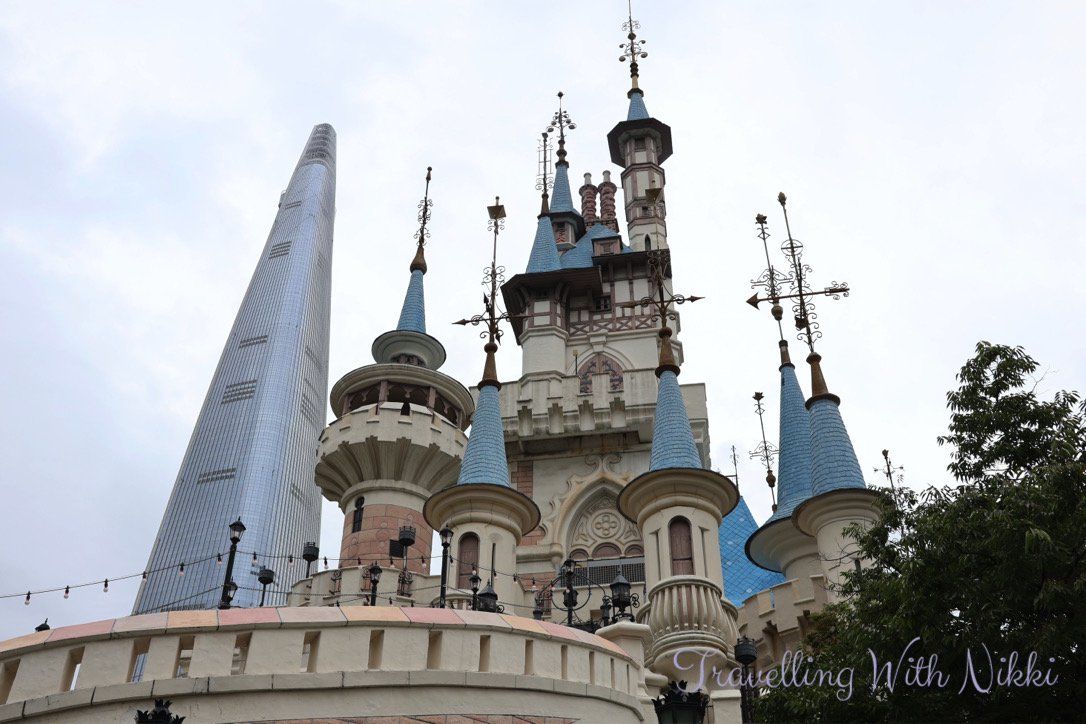
Lotte World in Seoul is one of the world’s largest indoor theme parks, located within the giant Lotte World complex which also includes a shopping mall, aquarium, ice rink, hotels and cinemas as well as the Lotte World Tower which is the sixth tallest building in the world. The indoor section of the park is called Lotte World Adventure while the outdoor section located on Seokchon Lake is known as Magic Island.
The park offers a mix of rides and family friendly attractions, along with parades, seasonal events and festivals. It also features a Folk Museum showcasing over 5,000 years of Korean history. Lotte World is open year round and is ideal for a rainy day in Seoul and is accessible via Exit 4 of Jamsil Station.
You can easily book your Lotte World tickets in advance through Klook to save money compared to buying at the gate.
The above are affiliate links through Klook. Any tickets or experiences purchased from these links earns myself a small commission at no additional cost to you.
Hongdae
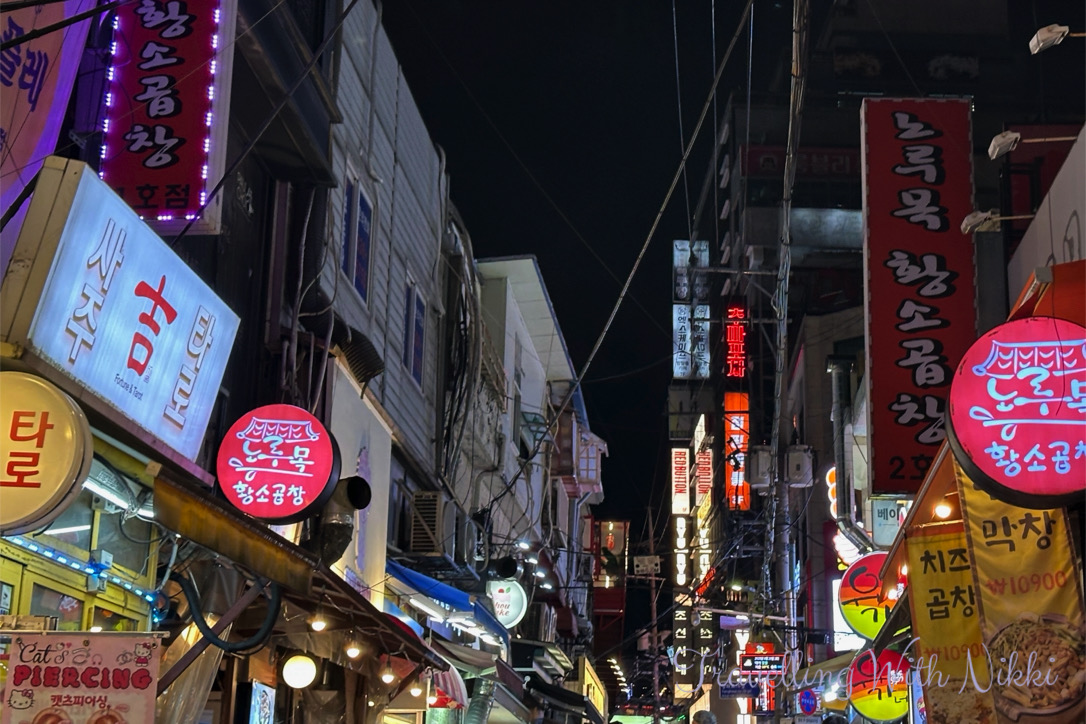
Hongdae which is short for Hongik University (Hongik Daehakgyo) is one of Seoul’s trendiest neighbourhoods and is known for its youthful energy, creativity and vibrant nightlife. During the day visitors can explore the colourful street art, unique cafes, photo booths as well as shop to their hearts’ content at both big name stores and small independent boutiques where you can find almost anything you could ever want to buy.
At night (and especially at weekends), the area truly comes alive as Hongdae transforms into one of the city’s busiest nightlife districts filled with bars, nightclubs, live music venues, restaurants, karaoke rooms along with street food including foot long ice creams. Even if you are not a big nightlife person, it is worth visiting Hongdae just to walk around and experience the bright lights and lively party atmosphere of the area.
Eating Out in Seoul
Eating out in Seoul is one of the best parts of visiting the city. There are so many choices from Tteokbokki (delicious rice cakes in a spicy sauce ), crispy fried chicken, hotteok pancakes, bulgogi and kimbap rolls amongst so much more. Street food is everywhere but be aware that the spice level can be higher than what you might be used to in other countries so be prepared!
Korean food is usually very meat heavy but you can find many vegetarian and vegan places to eat by checking the HappyCow website – however you may struggle with any other dietary requirements whilst in South Korea. You can even create full meals inside all of the convenience stores (as well as cook them there) and when you need a break from exploring, Seoul’s café culture is incredible as there are cute cafes all over the city where you can relax with a coffee and a salt bread pastry while watching the world go by.
Apps to Download Before Arriving in Seoul
Naver Maps / Kakao Maps
As Google Maps is not reliable in South Korea, Naver Maps or Kakao Maps which are both available in English are essential for your visit. They provide accurate locations, opening hours and detailed maps along with walking directions that can avoid stairs if needed. The apps also cover public transportation and let you pin all your planned destinations, making it very easy to navigate Seoul and plan your sightseeing.
Papago
Papago is perfect for translating both spoken and written Korean and is far more accurate than Google Translate. I used it daily to read some signs as well as checking ingredients on convenience store foods using the live translation feature.
Seoul Subway
The official Seoul Subway app is perfect for navigating around the city. It can find the nearest station to your location and even let you enter attractions as your destination. The app also provides real time train information, route planning and detailed station information. It can also show which train doors are best to make transfers quick and easy and can also display how crowded each carriage is.
BucaCheck
BucaCheck is a very simple and helpful app which allows you to check your T-Money card balance at any time and view your recent transactions simply by tapping your card on the back of your phone.
Skincare Shopping in Seoul
Shopping in Seoul is an absolute dream come true especially if you love skincare and beauty products as the prices are so much cheaper than at home so it is very easy to spend a lot – and I did! Olive Young is a must visit and it was one of the first places I went to after arriving in Seoul. However before you go, make sure to do some research on what skincare suits your skin type and just because a product is popular or comes in cute packaging does not mean that it is the right choice for you. Walking into Olive Young can feel very overwhelming so knowing what you are looking for will help a lot – I had a long list with me – and the staff are very knowledgable and will always help you out with any questions or recommendations.
Also always remember to take your passport out with you whenever you go shopping as many stores offer tax free shopping for tourists. Some, like Olive Young, will give instant tax refunds right at the counter while others will scan your passport and hand you a receipt so you can claim your tax refund at the airport kiosks when you leave South Korea.
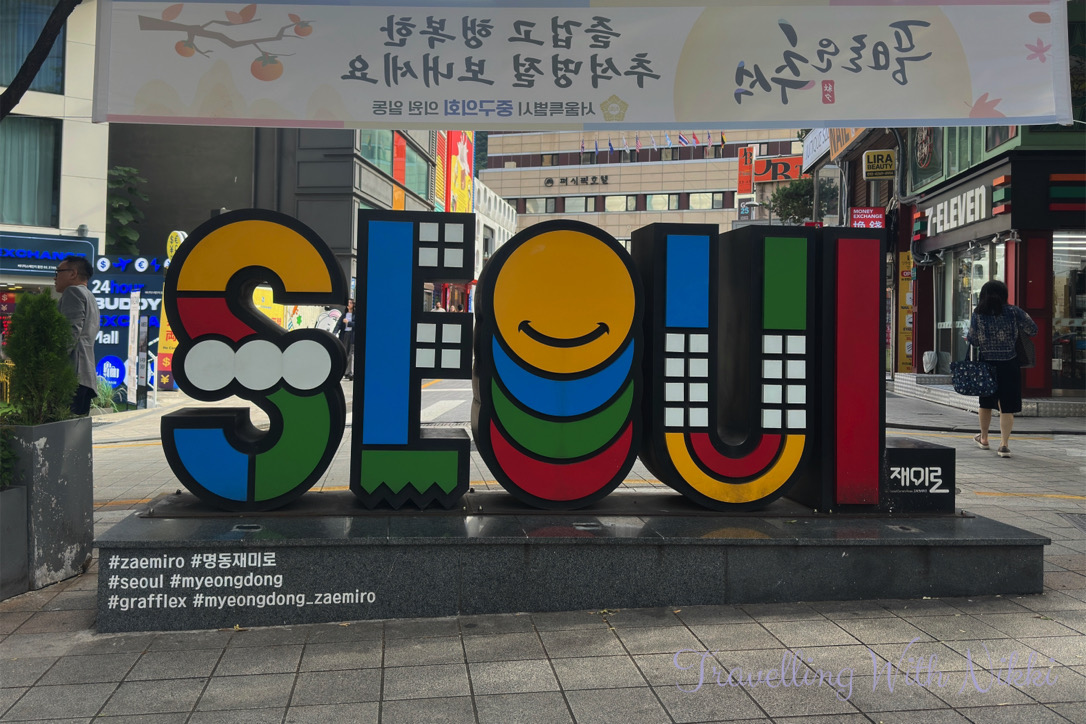
Other Information to Know When Visiting Seoul
If there is anything that you forget to pack for your trip to Seoul, do not panic and simply head to the nearest Daiso instead which can be found across the city where you can buy almost anything that you need – I was able to buy a long USB cable to charge my iPhone for ₩3,000 (£1.60 / US$2.10) when our first hotel only had power points on one side of the bed.
Instead of filling out the immigration card on the plane before landing into Seoul, it is also possible to fill out the E-Arrival card online within three days of your arrival into South Korea.
Try to pack light for your visit to Seoul but remember to pack clothes appropriate to the season that you are visiting in as the summers are brutally hot and winter can be bitterly cold.
Make sure to bring comfortable shoes with you to Seoul as you will do a lot of walking – I walked over sixty miles in seven days!
If you are planning on doing a lot of shopping, make sure to bring an extra bag with you such as a packable holdall. Also if you are travelling with only carry on luggage and buying a lot of Korean skincare products, you will need to comply with any liquid restrictions when going through security at the airport when leaving Seoul.
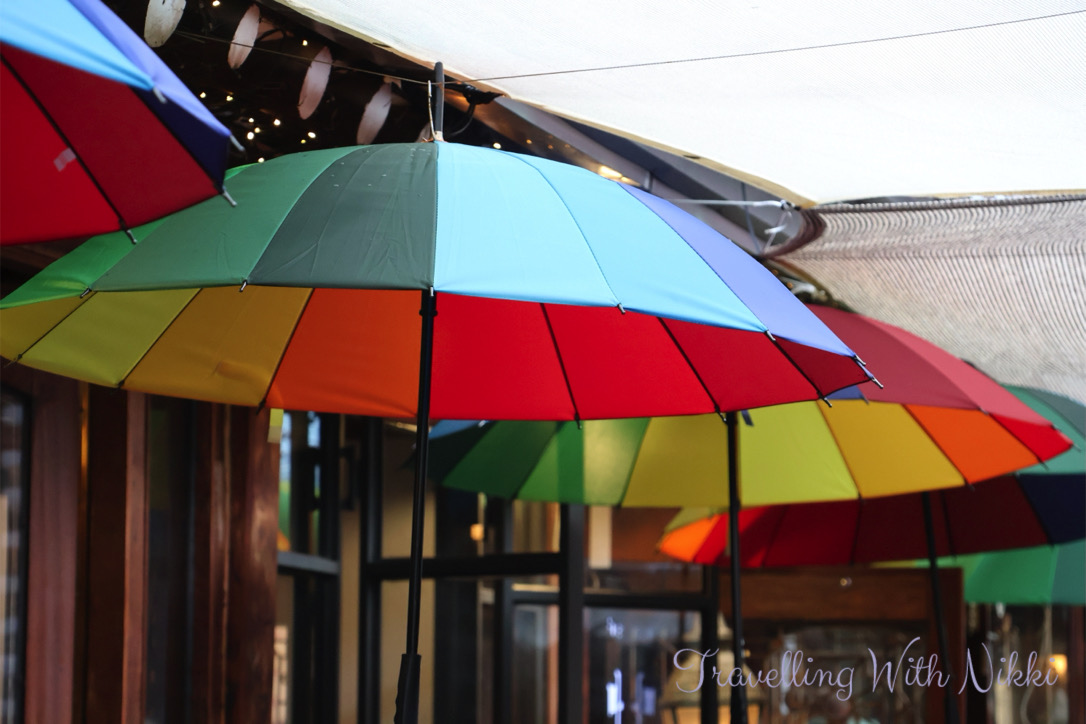
There is no need to bring an umbrella with you as you can simply buy one for next to nothing if needed. I bought one for ₩3,000 (£1.60 / US$2.10) on a very rainy afternoon – they are for sale everywhere – and I even brought it back home with me after our trip! There are also umbrella dryers located at the entrances to all shops.
The plug socket used in South Korea is Type C or Type F featuring two round pins which is the same as most European countries.
When leaving Seoul, make sure to download and register for the ICN Smartpass app which will allow you to save time and bypass many of the long lines at Incheon Airport by using dedicated facial recognition lanes – it took us only five minutes to get from check in to the departure lounge!
Uber is available in Seoul and I had no issues at all using it whilst I was there with my existing account and I found it to be very affordable and convenient.
When dining out at a restaurant and there is no cutlery on the table, make sure to look in the little drawer at the end of the table where you will be able to find it.
There is no need to tip when eating out or for any other services when in South Korea.
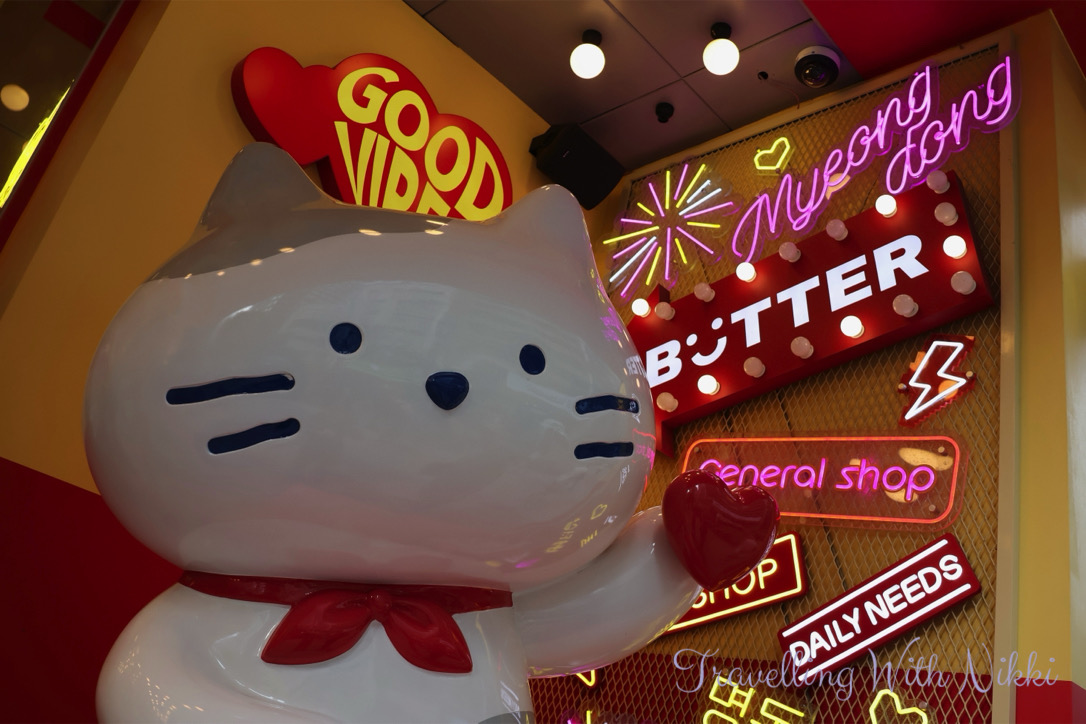
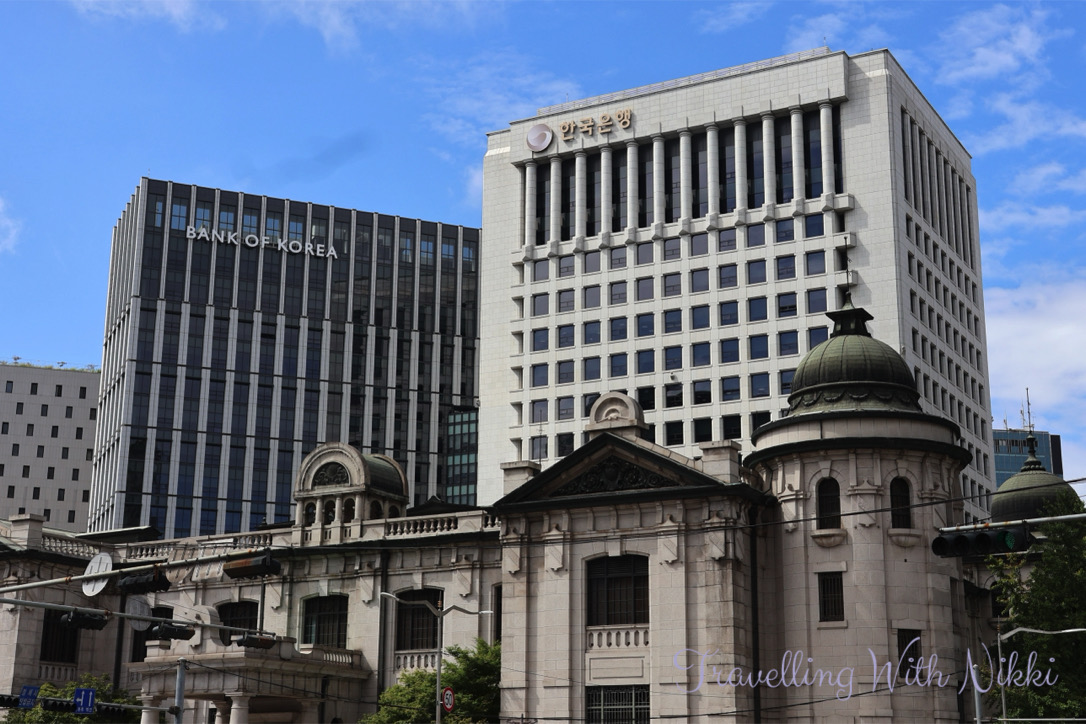
Be prepared for stairs everywhere in Seoul and do not expect every subway station to have escalators as most do not. There is always at least one elevator but it will probably not be at the exit that you need. You will also come across plenty of stairs at the entrances to underground malls and in some places, the only way to cross the road is to use the underpass which means even more stairs. However if using Naver Maps, you can easily search for walking directions which avoid stairs.
If you are out sightseeing and end up buying a lot of shopping, there are lockers available in most subway stations where you can leave any heavy bags while you continue exploring.
There are clean and free to use public toilets located everywhere throughout Seoul.
Whilst you do need to be prepared to experience all weathers in Seoul, there are also giant umbrella shades at many pedestrian crossings to either shield you from the sun or the rain whilst waiting to cross the road.
You will not see any litter in Seoul despite the fact that just like in Japan, you will rarely see a bin when walking around. There are however bins located in convenience stores and if buying any street food, simply hand the containers back to the vendor once you have finished eating.
Make sure to get at least one ice cup drink from any of the convenience stores whilst you are in South Korea – the Peach Iced Tea, Purple Lemonade and Sparkling Mangoade are my favourite.
I found Seoul to be extremely safe and I had no issues walking around and exploring by myself one morning. Many people will even leave their bags and belongings unattended in restaurants when they go to use the toilets with no fear that they will be stolen.
There are many green spaces across Seoul and it is a great feeling to take a few minutes out of each day just to escape the hustle and bustle of the busy city.
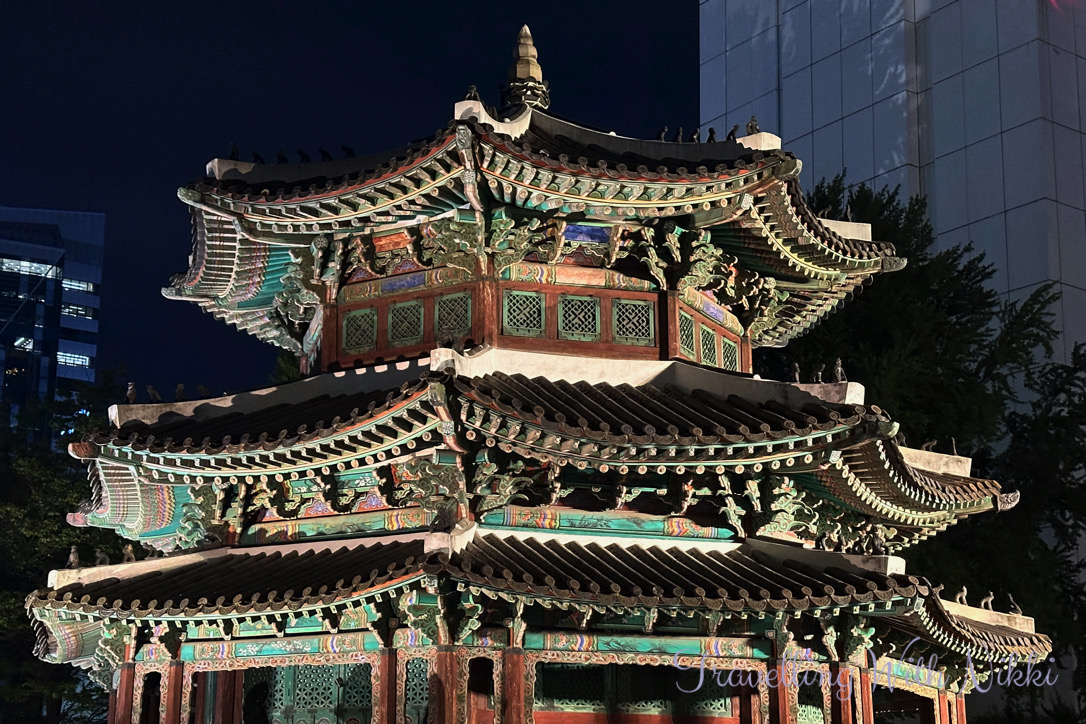
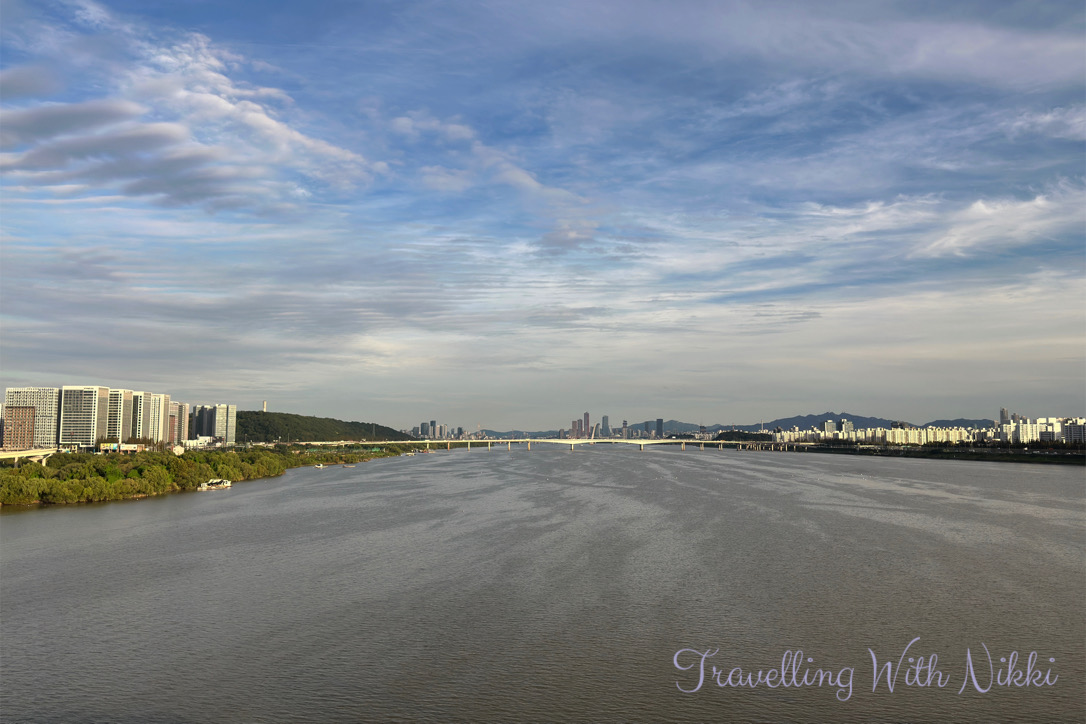
Seoul is truly one of the best places that I have ever had the chance to visit. In less than a week, it became one of my new favourite cities offering the perfect blend of old and new at every turn. I completely fell in love with South Korea during my trip and I cannot wait for the day that I get to return which I hope will be very soon. Seoul definitely has a way of leaving a lasting impression and I already know that it’s a city that I will keep coming back to again and again.
Have fun and enjoy the incredible city of Seoul.
Support Me and Buy Me a Coffee
Follow Me on Instagram
Pin this Blog Post on Pinterest
Follow Me on Bloglovin’
You might also like...
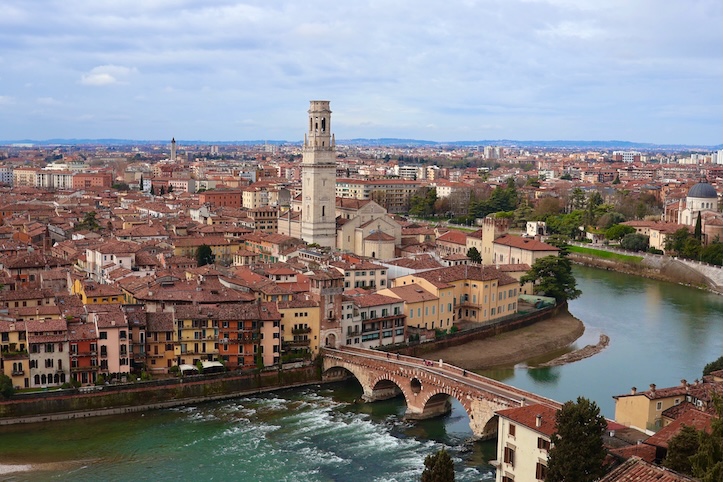 Everything You Need To Know Before Visiting Verona
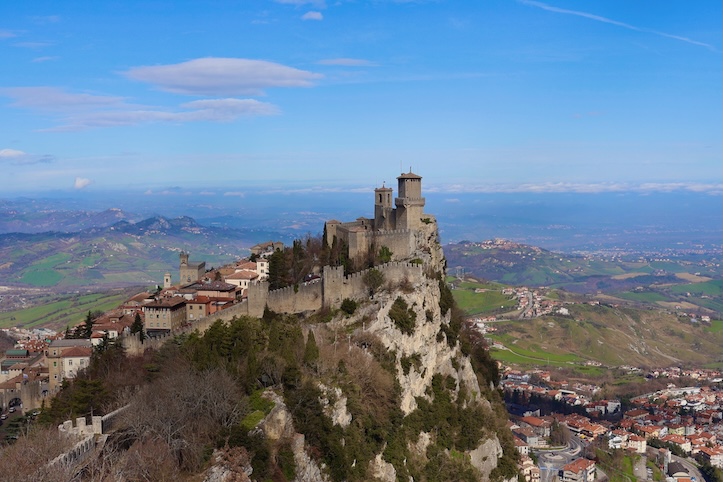 Everything You Need To Know Before Visiting San Marino
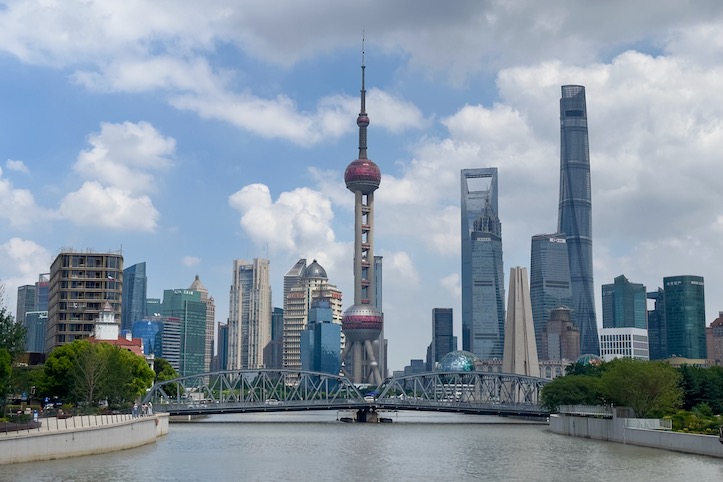 Visiting Shanghai Once Again in Summer 2023
 Everything You Need To Know Before Visiting Gibraltar
 Everything You Need To Know Before Visiting Venice
 How I Save Money to Travel the World
 Mistakes Not to Make in New York City as a Tourist
 How to Plan an Amazing Road Trip in the USA
 Travel Tips and Advice for Your First Trip to Japan
 Travel Tips and Advice for Your First Visit to Cuba


